Importante
La traduzione è uno sforzo comunitario you can join. Questa pagina è attualmente tradotta al 66.20%.
24.1.6. Fix Geometry
24.1.6.1. Add missing vertices along borders
Aggiunto nella versione 3.42
Adds the missing vertices along polygons borders, based on an error layer from the Missing vertices along borders algorithm.
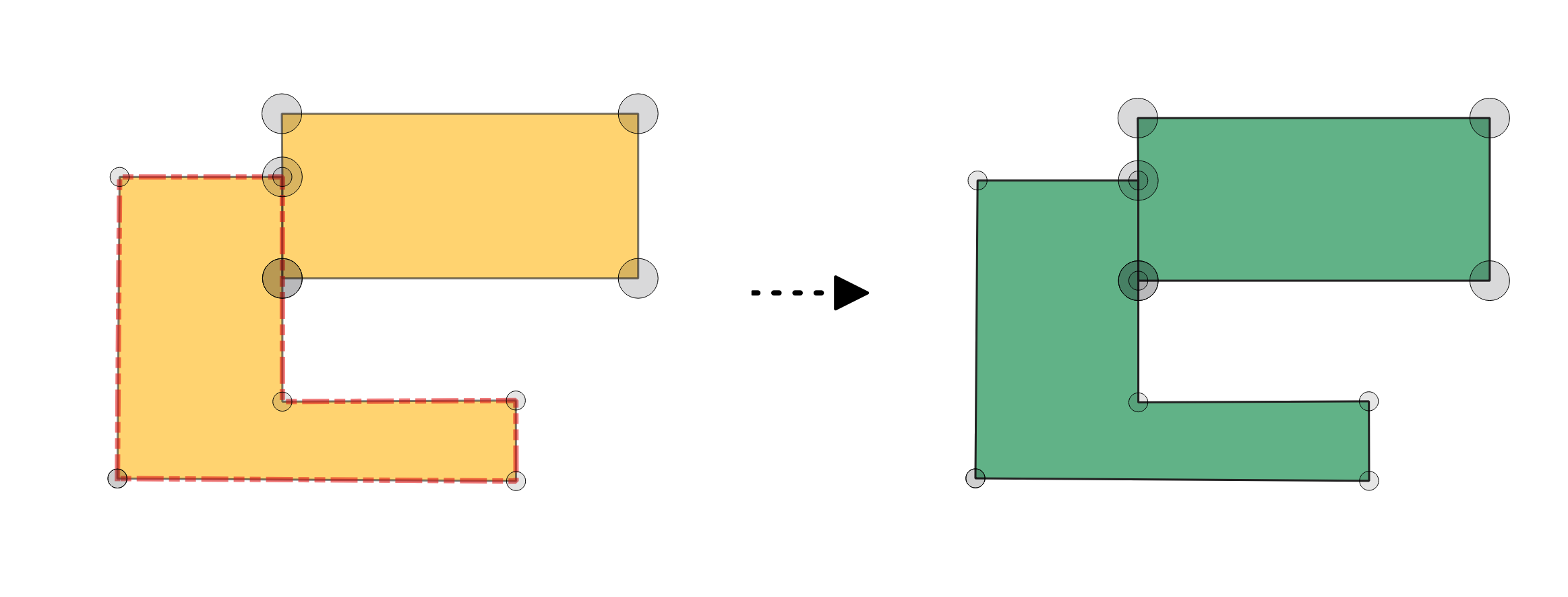
Fig. 24.16 Fixing missing vertices along polygon borders.
Parametri
Parametri di Base
Etichetta |
Nome |
Tipo |
Descrizione |
|---|---|---|---|
Layer in ingresso |
|
[vector: polygon] |
Layer with the geometries to fix, same as input in the check algorithm. |
Error layer |
|
[vector: point] |
Point layer with the errors location, generated by the check algorithm. |
Field of original feature unique identifier |
|
[tablefield: any] |
Field storing unique values for feature identification in input layer, as set in the check algorithm. |
Field of part index |
|
[tablefield: integer] Valore predefinito: |
Field storing the erroneous feature’s geometry part number. |
Field of ring index |
|
[tablefield: integer] Valore predefinito: |
Field storing the erroneous feature’s geometry ring number. |
Field of vertex index |
|
[tablefield: integer] Valore predefinito: |
Field storing the erroneous feature’s geometry vertex number. |
Border vertices fixed layer |
|
[vector: polygon] Predefinito: |
Specification of the output layer containing fixed features. One of:
La codifica del file può anche essere cambiata qui. |
Report layer from fixing border vertices |
|
[vector: point] Predefinito: |
Specification of the output layer containing the fixes location. One of:
La codifica del file può anche essere cambiata qui. |
Parametri Avanzati
Etichetta |
Nome |
Tipo |
Descrizione |
|---|---|---|---|
Tolleranza |
|
[numeric: integer] Predefinito: 8 |
Numerical precision of geometric operations, given as an integer n, meaning that two vertices less than 10-n apart (in map units) are considered to be merged. |
In uscita:
Etichetta |
Nome |
Tipo |
Descrizione |
|---|---|---|---|
Report layer from fixing border vertices |
|
[vector: point] |
Output point layer representing the error locations and fix applied. The output layer contains the following fields:
|
Border vertices fixed layer |
|
[vector: polygon] |
Output layer with the geometry fix applied to the input features. The layer contains the same fields as in the input layer. |
Codice Python
ID algoritmo: native:fixgeometrymissingvertex
import processing
processing.run("algorithm_id", {parameter_dictionary})
L” id dell’algoritmo viene visualizzato quando si passa il mouse sull’algoritmo nella finestra degli strumenti di elaborazione. Il dizionario dei parametri fornisce i Nomi e i valori dei parametri. Vedi Usare gli algoritmi di Processing dalla console dei comandi per dettagli su come eseguire algoritmi di elaborazione dalla console Python.
24.1.6.2. Convert to strictly multipart
Aggiunto nella versione 3.42
Converts multipart geometries that consists of only one geometry into singlepart geometries, based on an error layer from the Strictly multipart algorithm. Layer geometry type will not be changed and will remain multipart.
Vedi anche
Parametri
Parametri di Base
Etichetta |
Nome |
Tipo |
Descrizione |
|---|---|---|---|
Layer in ingresso |
|
[vector: line, polygon] |
Layer with the geometries to fix, same as input in the check algorithm. |
Error layer |
|
[vector: point] |
Point layer with the errors location, generated by the check algorithm. |
Field of original feature unique identifier |
|
[tablefield: any] |
Field storing unique values for feature identification in input layer, as set in the check algorithm. |
Strictly-multipart layer |
|
[vector: same as input] Predefinito: |
Specification of the output layer containing fixed features. One of:
La codifica del file può anche essere cambiata qui. |
Report layer from fixing multipart |
|
[vector: point] Predefinito: |
Specification of the output layer containing the centroids of the fixed geometries. One of:
La codifica del file può anche essere cambiata qui. |
Parametri Avanzati
Etichetta |
Nome |
Tipo |
Descrizione |
|---|---|---|---|
Tolleranza |
|
[numeric: integer] Predefinito: 8 |
Numerical precision of geometric operations, given as an integer n, meaning that two vertices less than 10-n apart (in map units) are considered to be merged. |
In uscita:
Etichetta |
Nome |
Tipo |
Descrizione |
|---|---|---|---|
Report layer from fixing multipart |
|
[vector: point] |
Output point layer representing the error locations and fix applied. The output layer contains the following fields:
|
Strictly-multipart layer |
|
[vector: same as input] |
Output layer with the geometry fix applied to the input features. The layer contains the same fields as in the input layer. |
Codice Python
ID algoritmo: native:fixgeometrymultipart
import processing
processing.run("algorithm_id", {parameter_dictionary})
L” id dell’algoritmo viene visualizzato quando si passa il mouse sull’algoritmo nella finestra degli strumenti di elaborazione. Il dizionario dei parametri fornisce i Nomi e i valori dei parametri. Vedi Usare gli algoritmi di Processing dalla console dei comandi per dettagli su come eseguire algoritmi di elaborazione dalla console Python.
24.1.6.3. Delete duplicated vertices
Aggiunto nella versione 3.42
Deletes duplicated vertices from the input geometries, based on errors reported by the Vertici duplicati algorithm.
Vedi anche
Parametri
Parametri di Base
Etichetta |
Nome |
Tipo |
Descrizione |
|---|---|---|---|
Layer in ingresso |
|
[vector: line, polygon] |
Layer with the geometries to fix, same as input in the check algorithm. |
Error layer |
|
[vector: point] |
Point layer with the errors location, generated by the check algorithm. |
Field of original feature unique identifier |
|
[tablefield: any] |
Field storing unique values for feature identification in input layer, as set in the check algorithm. |
Field of part index |
|
[tablefield: integer] Valore predefinito: |
Field storing the erroneous feature’s geometry part number. |
Field of ring index |
|
[tablefield: integer] Valore predefinito: |
Field storing the erroneous feature’s geometry ring number. |
Field of vertex index |
|
[tablefield: integer] Valore predefinito: |
Field storing the erroneous feature’s geometry vertex number. |
Fixed duplicate vertices layer |
|
[vector: same as input] Predefinito: |
Specification of the output layer containing fixed features. One of:
La codifica del file può anche essere cambiata qui. |
Report layer from fixing duplicate vertices |
|
[vector: point] Predefinito: |
Specification of the output layer containing the fixes location. One of:
La codifica del file può anche essere cambiata qui. |
Parametri Avanzati
Etichetta |
Nome |
Tipo |
Descrizione |
|---|---|---|---|
Tolleranza |
|
[numeric: integer] Predefinito: 8 |
Numerical precision of geometric operations, given as an integer n, meaning that two vertices less than 10-n apart (in map units) are considered to be merged. |
In uscita:
Etichetta |
Nome |
Tipo |
Descrizione |
|---|---|---|---|
Report layer from fixing duplicate vertices |
|
[vector: point] |
Output point layer representing the error locations and fix applied. The output layer contains the following fields:
|
Fixed duplicate vertices layer |
|
[vector: same as input] |
Output layer with the geometry fix applied to the input features. The layer contains the same fields as in the input layer. |
Codice Python
ID algoritmo: native:fixgeometryduplicatenodes
import processing
processing.run("algorithm_id", {parameter_dictionary})
L” id dell’algoritmo viene visualizzato quando si passa il mouse sull’algoritmo nella finestra degli strumenti di elaborazione. Il dizionario dei parametri fornisce i Nomi e i valori dei parametri. Vedi Usare gli algoritmi di Processing dalla console dei comandi per dettagli su come eseguire algoritmi di elaborazione dalla console Python.
24.1.6.4. Eliminare elementi
Aggiunto nella versione 3.42
Deletes error features based on an error layer from some check geometry algorithms, such as:
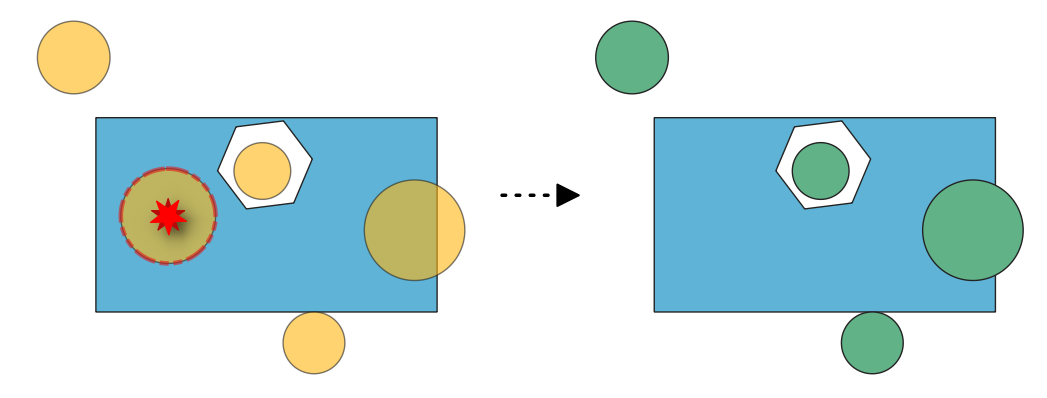
Fig. 24.17 Fixing errors from the «Features inside polygon» algorithm check.
Vedi anche
Parametri
Parametri di Base
Etichetta |
Nome |
Tipo |
Descrizione |
|---|---|---|---|
Layer in ingresso |
|
[vector: geometry] |
Layer with the geometries to fix, same as input in the check algorithm. |
Error layer |
|
[vector: point] |
Point layer with the errors location, generated by the check algorithm. |
Field of original feature unique identifier |
|
[tablefield: any] |
Field storing unique values for feature identification in input layer, as set in the check algorithm. |
Cleaned layer |
|
[vector: same as input] Predefinito: |
Specification of the output layer containing fixed features. One of:
La codifica del file può anche essere cambiata qui. |
Report layer from deleting features |
|
[vector: point] Predefinito: |
Specification of the output layer containing the fixes location. One of:
La codifica del file può anche essere cambiata qui. |
In uscita:
Etichetta |
Nome |
Tipo |
Descrizione |
|---|---|---|---|
Report layer from deleting features |
|
[vector: point] |
Output point layer representing the error locations and fix applied. The output layer contains the following fields:
|
Cleaned layer |
|
[vector: same as input] |
Output layer with features removed based on detected errors. The layer contains the same fields as in the input layer. |
Codice Python
ID algoritmo: native:fixgeometrydeletefeatures
import processing
processing.run("algorithm_id", {parameter_dictionary})
L” id dell’algoritmo viene visualizzato quando si passa il mouse sull’algoritmo nella finestra degli strumenti di elaborazione. Il dizionario dei parametri fornisce i Nomi e i valori dei parametri. Vedi Usare gli algoritmi di Processing dalla console dei comandi per dettagli su come eseguire algoritmi di elaborazione dalla console Python.
24.1.6.5. Delete overlaps
Aggiunto nella versione 3.42
Deletes overlapping areas based on an error layer from the Overlaps algorithm.
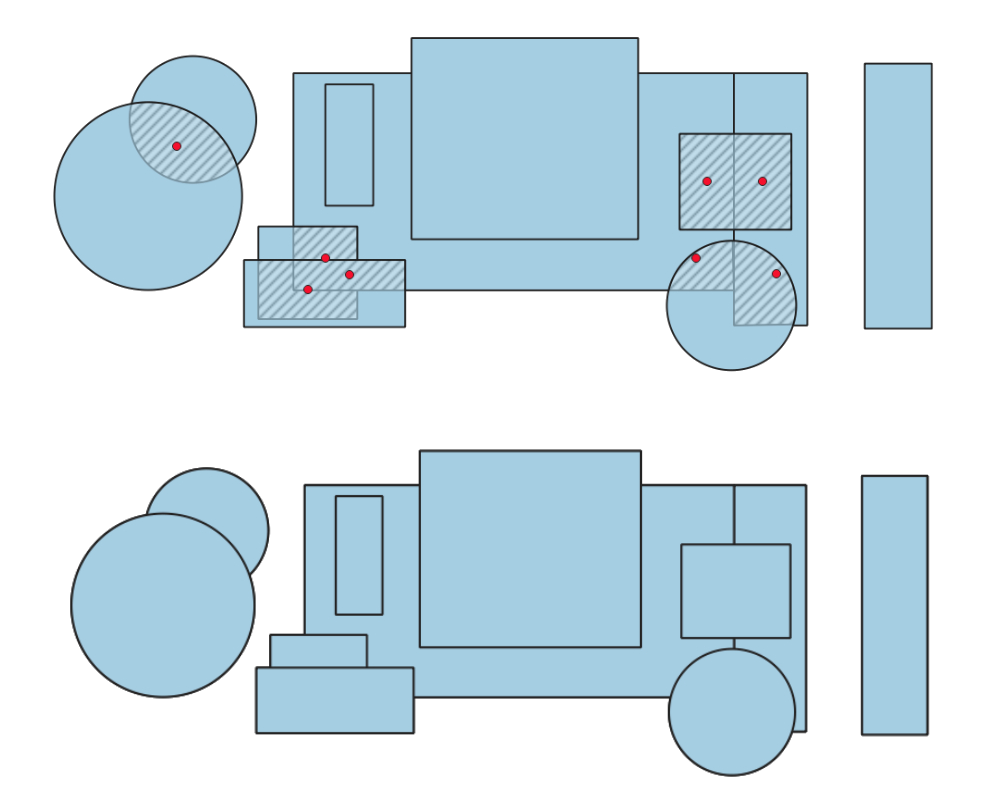
Fig. 24.18 Deleting overlapping areas.
Parametri
Parametri di Base
Etichetta |
Nome |
Tipo |
Descrizione |
|---|---|---|---|
Layer in ingresso |
|
[vector: polygon] |
Layer with the geometries to fix, same as input in the check algorithm. |
Error layer |
|
[vector: point] |
Point layer with the errors location, generated by the check algorithm. |
Field of original feature unique identifier |
|
[tablefield: any] |
Field storing unique values for feature identification in input layer, as set in the check algorithm. |
Field of overlap feature unique identifier |
|
[tablefield: any] |
Field storing unique values for the overlapping feature identification in input layer, as set in the check algorithm. |
Field of error value |
|
[tablefield: any] |
Field storing the error value for each feature, as set in the check algorithm. |
No-overlap layer |
|
[vector: polygon] Predefinito: |
Specification of the output layer containing fixed features. One of:
La codifica del file può anche essere cambiata qui. |
Report layer from fixing overlaps |
|
[vector: point] Predefinito: |
Specification of the output layer containing the fixes location. One of:
La codifica del file può anche essere cambiata qui. |
Parametri Avanzati
Etichetta |
Nome |
Tipo |
Descrizione |
|---|---|---|---|
Tolleranza |
|
[numeric: integer] Predefinito: 8 |
Numerical precision of geometric operations, given as an integer n, meaning that two vertices less than 10-n apart (in map units) are considered to be merged. |
In uscita:
Etichetta |
Nome |
Tipo |
Descrizione |
|---|---|---|---|
Report layer from fixing overlaps |
|
[vector: point] |
Output point layer representing the error locations and fix applied. The output layer contains the following fields:
|
No-overlap layer |
|
[vector: polygon] |
Output layer with input features edited. Overlapping areas reported as errors are removed. The layer contains the same fields as in the input layer. |
Codice Python
ID algoritmo: native:fixgeometryoverlap
import processing
processing.run("algorithm_id", {parameter_dictionary})
L” id dell’algoritmo viene visualizzato quando si passa il mouse sull’algoritmo nella finestra degli strumenti di elaborazione. Il dizionario dei parametri fornisce i Nomi e i valori dei parametri. Vedi Usare gli algoritmi di Processing dalla console dei comandi per dettagli su come eseguire algoritmi di elaborazione dalla console Python.
24.1.6.6. Delete small angles
Aggiunto nella versione 3.42
Deletes vertices based on an error layer from the Angoli piccoli algorithm. When deletion of a vertex results in a duplicate vertex (when a spike vertex is deleted), the duplicate vertex is deleted to keep a single vertex and preserve topology.
Attenzione
This algorithm removes the vertex at the reported small angles, generating new segments that may form a new small angle.

Fig. 24.19 Fixing reported errors on a line feature for angles lower than 15°.
Parametri
Parametri di Base
Etichetta |
Nome |
Tipo |
Descrizione |
|---|---|---|---|
Layer in ingresso |
|
[vector: line, polygon] |
Layer with the geometries to fix, same as input in the check algorithm |
Error layer |
|
[vector: point] |
Point layer with the errors location, generated by the check algorithm |
Field of original feature unique identifier |
|
[tablefield: any] |
Field storing unique values for feature identification in input layer, as set in the check algorithm |
Field of part index |
|
[tablefield: integer] Valore predefinito: |
Field storing the erroneous feature’s geometry part number. |
Field of ring index |
|
[tablefield: integer] Valore predefinito: |
Field storing the erroneous feature’s geometry ring number. |
Field of vertex index |
|
[tablefield: integer] Valore predefinito: |
Field storing the erroneous feature’s geometry vertex number. |
Small angle fixed layer |
|
[vector: same as input] Predefinito: |
Specification of the output layer containing fixed features. One of:
La codifica del file può anche essere cambiata qui. |
Report layer from fixing small angles |
|
[vector: point] Predefinito: |
Specification of the output layer containing the fixes location. One of:
La codifica del file può anche essere cambiata qui. |
Parametri Avanzati
Etichetta |
Nome |
Tipo |
Descrizione |
|---|---|---|---|
Tolleranza |
|
[numeric: integer] Predefinito: 8 |
Numerical precision of geometric operations, given as an integer n, meaning that two vertices less than 10-n apart (in map units) are considered to be merged. |
In uscita:
Etichetta |
Nome |
Tipo |
Descrizione |
|---|---|---|---|
Report layer from fixing small angles |
|
[vector: point] |
Output point layer representing the error locations and fix applied. The output layer contains the following fields:
|
Small angle fixed layer |
|
[same as input] |
Output layer with the geometry fix applied to the input features. The layer contains the same fields as in the input layer. |
Codice Python
ID algoritmo: native:fixgeometryangle
import processing
processing.run("algorithm_id", {parameter_dictionary})
L” id dell’algoritmo viene visualizzato quando si passa il mouse sull’algoritmo nella finestra degli strumenti di elaborazione. Il dizionario dei parametri fornisce i Nomi e i valori dei parametri. Vedi Usare gli algoritmi di Processing dalla console dei comandi per dettagli su come eseguire algoritmi di elaborazione dalla console Python.
24.1.6.7. Riempire gli spazi vuoti
Aggiunto nella versione 3.42
Fills the gaps based on a gap and neighbors layer from the Small gaps algorithm. Three different fixing methods are available.
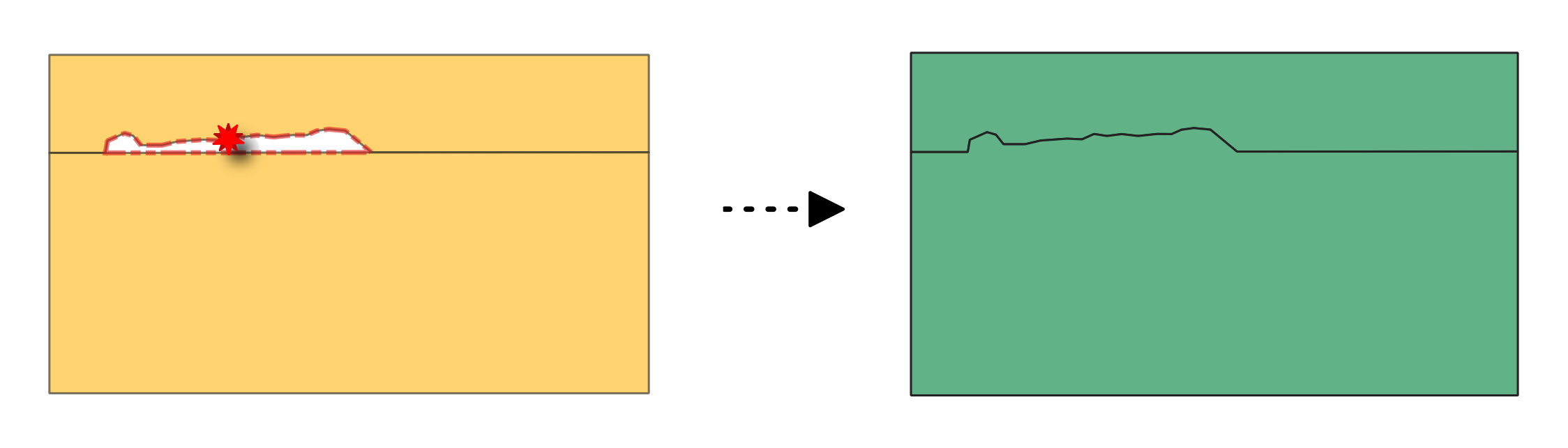
Fig. 24.20 Fixing gap between polygon features using the Add to largest neighbouring area method.
Parametri
Parametri di Base
Etichetta |
Nome |
Tipo |
Descrizione |
|---|---|---|---|
Layer in ingresso |
|
[vector: polygon] |
Layer with the geometries to fix, same as input in the check algorithm. |
Layer confinanti |
|
[vector: table] |
Relational table with the unique ID of the gap and its neighbors in input layer, generated by the check algorithm. |
Gaps layer |
|
[vector: polygon] |
Vettore poligonale contenente le geometrie degli spazi vuoti, generato dall’algoritmo di controllo. |
Metodo |
|
[enumeration] Valore predefinito: 0 |
Method to apply to the gap fixing. Possible values are:
|
Field of original feature unique identifier |
|
[tablefield: any] Default: gc_errorid |
Field storing unique values for feature identification in input layer, as set in the check algorithm. |
Field of error id |
|
[tablefield: any] |
Field storing the error ID for each gap, as output by the check algorithm. |
Gaps-filled layer |
|
[vector: polygon] Predefinito: |
Specification of the output layer containing fixed features. One of:
La codifica del file può anche essere cambiata qui. |
Report layer from fixing gaps |
|
[vector: point] Predefinito: |
Specification of the output layer containing the fixes location. One of:
La codifica del file può anche essere cambiata qui. |
Parametri Avanzati
Etichetta |
Nome |
Tipo |
Descrizione |
|---|---|---|---|
Tolleranza |
|
[numeric: integer] Predefinito: 8 |
Numerical precision of geometric operations, given as an integer n, meaning that two vertices less than 10-n apart (in map units) are considered to be merged. |
In uscita:
Etichetta |
Nome |
Tipo |
Descrizione |
|---|---|---|---|
Report layer from fixing gaps |
|
[vector: point] |
Output point layer representing the error locations and fix applied. The output layer contains the following fields:
|
Gaps-filled layer |
|
[vector: polygon] |
Output layer of polygons without gaps. The layer contains the same fields as in the input layer. |
Codice Python
ID algoritmo: native:fixgeometrygap
import processing
processing.run("algorithm_id", {parameter_dictionary})
L” id dell’algoritmo viene visualizzato quando si passa il mouse sull’algoritmo nella finestra degli strumenti di elaborazione. Il dizionario dei parametri fornisce i Nomi e i valori dei parametri. Vedi Usare gli algoritmi di Processing dalla console dei comandi per dettagli su come eseguire algoritmi di elaborazione dalla console Python.
24.1.6.8. Riempire i buchi
Aggiunto nella versione 3.42
Deletes holes in polygon geometries based on an error layer from the Buchi algorithm.
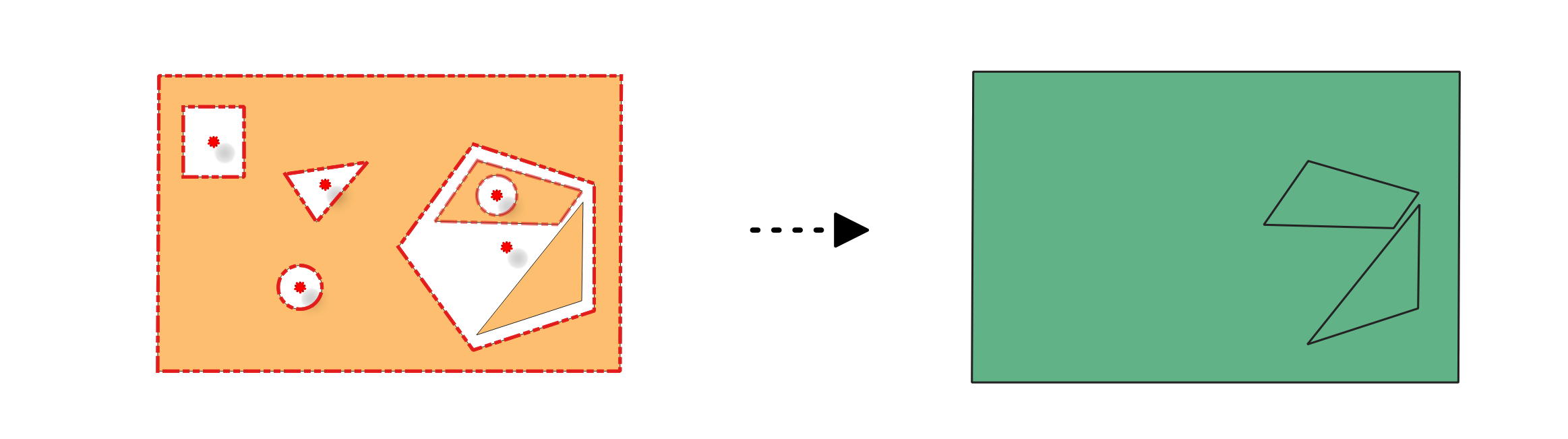
Fig. 24.21 Deleting holes in a polygon feature.
Vedi anche
Parametri
Parametri di Base
Etichetta |
Nome |
Tipo |
Descrizione |
|---|---|---|---|
Layer in ingresso |
|
[vector: line, polygon] |
Layer with the geometries to fix, same as input in the check algorithm |
Error layer |
|
[vector: point] |
Point layer with the errors location, generated by the check algorithm |
Field of original feature unique identifier |
|
[tablefield: any] |
Field storing unique values for feature identification in input layer, as set in the check algorithm |
Field of part index |
|
[tablefield: integer] Valore predefinito: |
Field storing the erroneous feature’s geometry part number. |
Field of ring index |
|
[tablefield: integer] Valore predefinito: |
Field storing the erroneous feature’s geometry ring number. |
Field of vertex index |
|
[tablefield: integer] Valore predefinito: |
Field storing the erroneous feature’s geometry vertex number. |
Holes-filled layer |
|
[vector: polygon] Predefinito: |
Specification of the output layer containing fixed features. One of:
La codifica del file può anche essere cambiata qui. |
Report layer from fixing holes |
|
[vector: point] Predefinito: |
Specification of the output layer containing the fixes location. One of:
La codifica del file può anche essere cambiata qui. |
Parametri Avanzati
Etichetta |
Nome |
Tipo |
Descrizione |
|---|---|---|---|
Tolleranza |
|
[numeric: integer] Predefinito: 8 |
Numerical precision of geometric operations, given as an integer n, meaning that two vertices less than 10-n apart (in map units) are considered to be merged. |
In uscita:
Etichetta |
Nome |
Tipo |
Descrizione |
|---|---|---|---|
Report layer from fixing holes |
|
[vector: point] |
Output point layer representing the error locations and fix applied. The output layer contains the following fields:
|
Holes-filled layer |
|
[vector: polygon] |
Output layer of polygons without holes. The layer contains the same fields as in the input layer. |
Codice Python
ID algoritmo: native:fixgeometryhole
import processing
processing.run("algorithm_id", {parameter_dictionary})
L” id dell’algoritmo viene visualizzato quando si passa il mouse sull’algoritmo nella finestra degli strumenti di elaborazione. Il dizionario dei parametri fornisce i Nomi e i valori dei parametri. Vedi Usare gli algoritmi di Processing dalla console dei comandi per dettagli su come eseguire algoritmi di elaborazione dalla console Python.
24.1.6.9. Fix small polygons
Aggiunto nella versione 3.42
Merges neighboring polygons according to the chosen method, based on an error layer from the Small polygons or Sliver polygons algorithm.
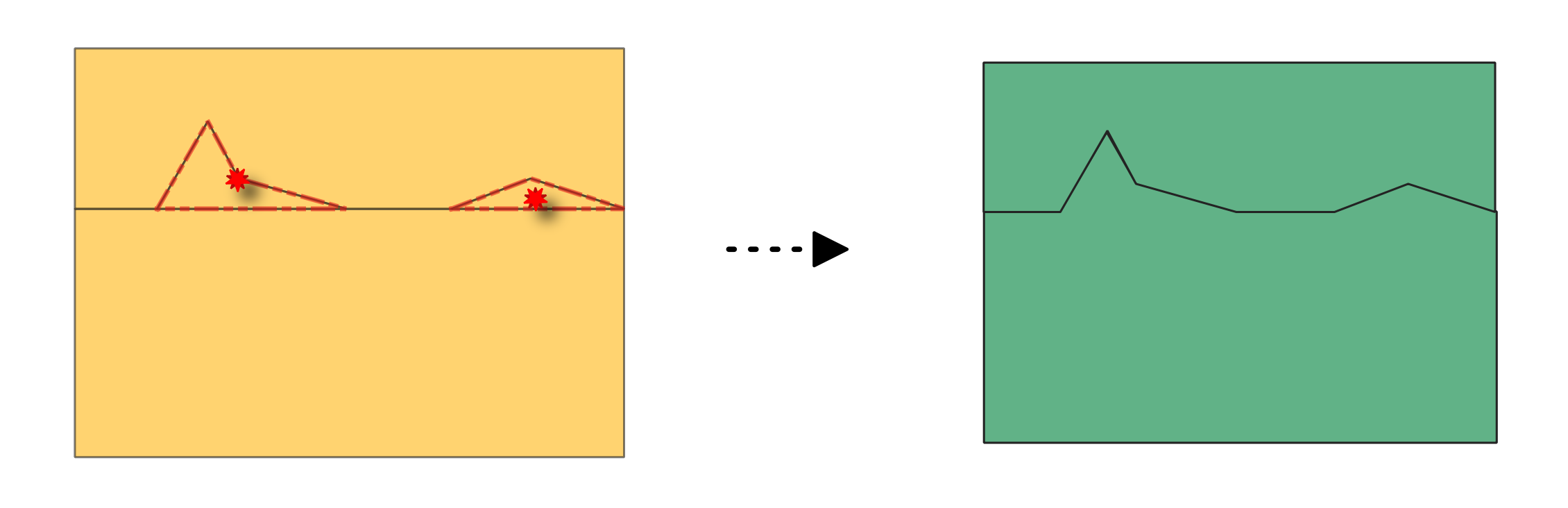
Fig. 24.22 Before and after fixing small polygons (method: merge with neighboring polygon with largest area).
Parametri
Parametri di Base
Etichetta |
Nome |
Tipo |
Descrizione |
|---|---|---|---|
Layer in ingresso |
|
[vector: polygon] |
Layer with the geometries to fix, same as input in the check algorithm. |
Error layer |
|
[vector: point] |
Point layer with the errors location, generated by the check algorithm. |
Metodo |
|
[enumeration] Valore predefinito: 0 |
Method to apply to the small polygon geometries:
|
Field to consider when merging polygons with the identical attribute method Opzionale |
|
[tablefield: any] |
Field in the input layer to consider when merging polygons with the identical attribute method. |
Field of original feature unique identifier |
|
[tablefield: any] |
Field storing unique values for feature identification in input layer, as set in the check algorithm. |
Field of part index |
|
[tablefield: integer] Valore predefinito: |
Field storing the erroneous feature’s geometry part number. |
Field of ring index |
|
[tablefield: integer] Valore predefinito: |
Field storing the erroneous feature’s geometry ring number. |
Field of vertex index |
|
[tablefield: integer] Valore predefinito: |
Field storing the erroneous feature’s geometry vertex number. |
Small polygons merged layer |
|
[vector: polygon] Predefinito: |
Specification of the output layer containing fixed features. One of:
La codifica del file può anche essere cambiata qui. |
Report layer from merging small polygons |
|
[vector: point] Predefinito: |
Specification of the output layer containing the fixes location. One of:
La codifica del file può anche essere cambiata qui. |
Parametri Avanzati
Etichetta |
Nome |
Tipo |
Descrizione |
|---|---|---|---|
Tolleranza |
|
[numeric: integer] Predefinito: 8 |
Numerical precision of geometric operations, given as an integer n, meaning that two vertices less than 10-n apart (in map units) are considered to be merged. |
In uscita:
Etichetta |
Nome |
Tipo |
Descrizione |
|---|---|---|---|
Report layer from merging small polygons |
|
[vector: point] |
Output point layer representing the error locations and fix applied. The output layer contains the following fields:
|
Small polygons merged layer |
|
[vector: polygon] |
Output layer of polygons with small polygons merged according to the chosen method. The layer contains the same fields as in the input layer. |
Codice Python
ID algoritmo: native:fixgeometryarea
import processing
processing.run("algorithm_id", {parameter_dictionary})
L” id dell’algoritmo viene visualizzato quando si passa il mouse sull’algoritmo nella finestra degli strumenti di elaborazione. Il dizionario dei parametri fornisce i Nomi e i valori dei parametri. Vedi Usare gli algoritmi di Processing dalla console dei comandi per dettagli su come eseguire algoritmi di elaborazione dalla console Python.
24.1.6.10. Split self-intersecting geometries
Aggiunto nella versione 3.42
Splits self-intersecting geometries based on an error layer from the Self-intersections algorithm.
Nota
This algorithm detects invalid polygon geometries (self-intersections).
To ensure these invalid features are not filtered out before processing, open
 Advanced options next to the Input layer and set
Invalid feature filtering to
Advanced options next to the Input layer and set
Invalid feature filtering to Do not Filter (Better Performance).
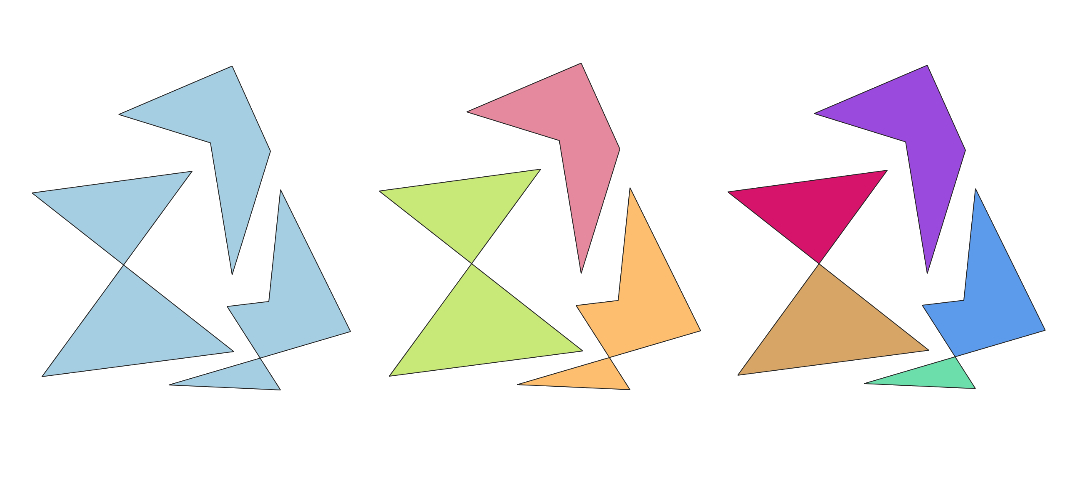
Fig. 24.23 Fixing self-intersection using various methods: as multi-part (middle), and multiple single-part geometries (right).
Parametri
Parametri di Base
Etichetta |
Nome |
Tipo |
Descrizione |
|---|---|---|---|
Layer in ingresso |
|
[vector: line, polygon] |
Layer with the geometries to fix, same as input in the check algorithm |
Error layer |
|
[vector: point] |
Point layer with the errors location, generated by the check algorithm |
Metodo |
|
[enumeration] |
Method to apply to the self-intersecting geometries:
|
Field of original feature unique identifier |
|
[tablefield: any] |
Field storing unique values for feature identification in input layer, as set in the check algorithm |
Field of part index |
|
[tablefield: integer] Valore predefinito: |
Field storing the erroneous feature’s geometry part number. |
Field of ring index |
|
[tablefield: integer] Valore predefinito: |
Field storing the erroneous feature’s geometry ring number. |
Field of vertex index |
|
[tablefield: integer] Valore predefinito: |
Field storing the erroneous feature’s geometry vertex number. |
Field of segment 1 |
|
[tablefield: integer] Valore predefinito: |
Field storing the number of the first segment involved in the erroneous intersection. |
Field of segment 2 |
|
[tablefield: integer] Valore predefinito: |
Field storing the number of the second segment involved in the erroneous intersection. |
Self-intersections fixed layer |
|
[vector: same as input] Predefinito: |
Specification of the output layer containing fixed features. One of:
La codifica del file può anche essere cambiata qui. |
Report layer from fixing self-intersections |
|
[vector: point] Predefinito: |
Specification of the output layer containing the fixes location. One of:
La codifica del file può anche essere cambiata qui. |
Parametri Avanzati
Etichetta |
Nome |
Tipo |
Descrizione |
|---|---|---|---|
Tolleranza |
|
[numeric: integer] Predefinito: 8 |
Numerical precision of geometric operations, given as an integer n, meaning that two vertices less than 10-n apart (in map units) are considered to be merged. |
In uscita:
Etichetta |
Nome |
Tipo |
Descrizione |
|---|---|---|---|
Report layer from fixing self-intersections |
|
[vector: point] |
Output point layer representing the error locations and fix applied. The output layer contains the following fields:
|
Self-intersections fixed layer |
|
[vector: same as input] |
Output layer with the geometry fix applied to the input features. The layer contains the same fields as in the input layer. |
Codice Python
ID algoritmo: native:fixgeometryselfintersection
import processing
processing.run("algorithm_id", {parameter_dictionary})
L” id dell’algoritmo viene visualizzato quando si passa il mouse sull’algoritmo nella finestra degli strumenti di elaborazione. Il dizionario dei parametri fornisce i Nomi e i valori dei parametri. Vedi Usare gli algoritmi di Processing dalla console dei comandi per dettagli su come eseguire algoritmi di elaborazione dalla console Python.