Viktigt
Översättning är en gemenskapsinsats du kan gå med i. Den här sidan är för närvarande översatt till 59.18%.
24.1.3. Check Geometry
24.1.3.1. Dangle-end lines
Added in 3.42
Detects dangle-end lines in line geometries and reports them as errors. A dangle-end line is a line feature that terminates at a vertex connected to only one segment, resulting in an endpoint without a proper connection.
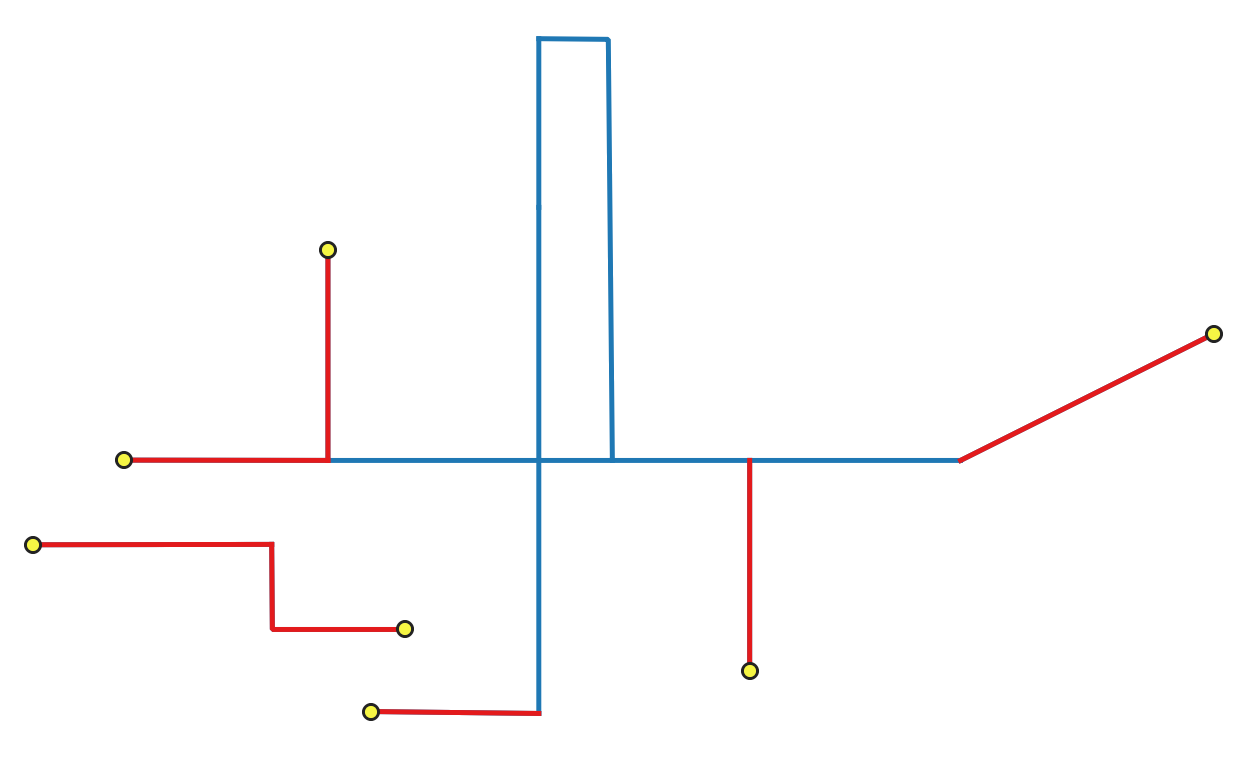
Fig. 24.2 Identifying dangle-end features (in red) and vertices (yellow).
Parametrar
Grundläggande parametrar
Etikett |
Namn |
Typ |
Beskrivning |
|---|---|---|---|
Inmatningslager |
|
[vektor: linje] |
Layer with the geometries to check. |
Unique feature identifier |
|
[tabellfält: alla] |
Field storing unique values for feature identification. |
Dangle-end errors |
|
[vektor: punkt] Standard: |
Specification of the output layer containing the errors location. One of:
Här kan du också ändra filkodningen. |
Dangle-end features Valfritt |
|
[vektor: linje] Standard: |
Line layer containing the identified dangle-end line features. One of:
Här kan du också ändra filkodningen. |
Avancerade parametrar
Etikett |
Namn |
Typ |
Beskrivning |
|---|---|---|---|
Tolerans |
|
[numerisk: heltal] Standard: 8 |
Numerical precision of geometric operations, given as an integer n, meaning that two vertices less than 10-n apart (in map units) are considered to be merged. |
Utgångar
Etikett |
Namn |
Typ |
Beskrivning |
|---|---|---|---|
Dangle-end errors |
|
[vektor: punkt] |
Output point layer representing the error locations and information. The output layer contains the following fields:
|
Dangle-end features |
|
[vektor: linje] |
Output line layer containing the input dangle-end features.
If no dangle-end features are found, the output layer will be empty.
Available fields are the same as in the |
Python-kod
Algorithm ID: native:checkgeometrydangle
import processing
processing.run("algorithm_id", {parameter_dictionary})
Algoritm-id visas när du håller muspekaren över algoritmen i verktygslådan Processing Toolbox. I parameter dictionary finns parameternamn och värden. Se Använda bearbetningsalgoritmer från konsolen för information om hur du kör bearbetningsalgoritmer från Python-konsolen.
24.1.3.2. Degenerate polygons
Added in 3.42
Checks the polygons with less than 3 points, which are degenerate polygons. Degenerate polygons are errors.
Observera
This algorithm detects invalid polygon geometries (degenerate polygons).
To ensure these invalid features are not filtered out before processing, open
 Advanced options next to the Input layer and set
Invalid feature filtering to
Advanced options next to the Input layer and set
Invalid feature filtering to Do not Filter (Better Performance).
Parametrar
Grundläggande parametrar
Etikett |
Namn |
Typ |
Beskrivning |
|---|---|---|---|
Inmatningslager |
|
[vektor: polygon] |
Layer with the geometries to check. |
Unique feature identifier |
|
[tabellfält: alla] |
Field storing unique values for feature identification. |
Degenerate polygons errors |
|
[vektor: punkt] Standard: |
Specification of the output layer containing the centroid of the degenerate polygons. One of:
Här kan du också ändra filkodningen. |
Degenerate polygons features Valfritt |
|
[vektor: polygon] Standard: |
Specification of the output layer containing the degenerate polygons. One of:
Här kan du också ändra filkodningen. |
Avancerade parametrar
Etikett |
Namn |
Typ |
Beskrivning |
|---|---|---|---|
Tolerans |
|
[numerisk: heltal] Standard: 8 |
Numerical precision of geometric operations, given as an integer n, meaning that two vertices less than 10-n apart (in map units) are considered to be merged. |
Utgångar
Etikett |
Namn |
Typ |
Beskrivning |
|---|---|---|---|
Degenerate polygons errors |
|
[vektor: punkt] |
Output point layer representing the error locations and information. The output layer contains the following fields:
|
Degenerate polygons features |
|
[vektor: polygon] |
Output polygon layer with features containing the degenerate polygons.
If no degenerate polygon features are found, the output layer will be empty.
Available fields are the same as in the |
Python-kod
Algorithm ID: native:checkgeometrydegeneratepolygon
import processing
processing.run("algorithm_id", {parameter_dictionary})
Algoritm-id visas när du håller muspekaren över algoritmen i verktygslådan Processing Toolbox. I parameter dictionary finns parameternamn och värden. Se Använda bearbetningsalgoritmer från konsolen för information om hur du kör bearbetningsalgoritmer från Python-konsolen.
24.1.3.3. Duplicated geometries
Added in 3.42
Checks for duplicated geometries in a vector layer, and reports them as errors.
Parametrar
Grundläggande parametrar
Etikett |
Namn |
Typ |
Beskrivning |
|---|---|---|---|
Inmatningslager |
|
[vektor: geometri] |
Layer with the geometries to check |
Unique feature identifier |
|
[tabellfält: alla] |
Field storing unique values for feature identification |
Duplicate geometries errors |
|
[vektor: punkt] Standard: |
Specification of the output layer containing the errors location. One of:
Här kan du också ändra filkodningen. |
Duplicate geometries Valfritt |
|
[vektor: samma som indata] Standard: |
Specification of the output layer containing the geometries that were found to be duplicated. One of:
Här kan du också ändra filkodningen. |
Avancerade parametrar
Etikett |
Namn |
Typ |
Beskrivning |
|---|---|---|---|
Tolerans |
|
[numerisk: heltal] Standard: 8 |
Numerical precision of geometric operations, given as an integer n, meaning that two vertices less than 10-n apart (in map units) are considered to be merged. |
Utgångar
Etikett |
Namn |
Typ |
Beskrivning |
|---|---|---|---|
Duplicate geometries errors |
|
[vektor: punkt] |
Output point layer representing the error locations and information. The output layer contains the following fields:
|
Duplicate geometries |
|
[vektor: samma som indata] |
Output layer containing the geometries that were found to be duplicated.
Available fields are the same as in the |
Python-kod
Algorithm ID: native:checkgeometryduplicate
import processing
processing.run("algorithm_id", {parameter_dictionary})
Algoritm-id visas när du håller muspekaren över algoritmen i verktygslådan Processing Toolbox. I parameter dictionary finns parameternamn och värden. Se Använda bearbetningsalgoritmer från konsolen för information om hur du kör bearbetningsalgoritmer från Python-konsolen.
24.1.3.4. Duplicated vertices
Added in 3.42
Checks for duplicated vertices in line or polygon geometries, and reports them as errors.
Parametrar
Grundläggande parametrar
Etikett |
Namn |
Typ |
Beskrivning |
|---|---|---|---|
Inmatningslager |
|
[vektor: linje, polygon] |
Layer with the geometries to check |
Unique feature identifier |
|
[tabellfält: alla] |
Field storing unique values for feature identification |
Duplicated vertices errors |
|
[vektor: punkt] Standard: |
Specification of the output layer containing the errors location. One of:
Här kan du också ändra filkodningen. |
Duplicated vertices features Valfritt |
|
[vektor: samma som indata] Standard: |
Specification of the output layer containing the features with duplicated vertices. One of:
|
Avancerade parametrar
Etikett |
Namn |
Typ |
Beskrivning |
|---|---|---|---|
Tolerans |
|
[numerisk: heltal] Standard: 8 |
Numerical precision of geometric operations, given as an integer n, meaning that two vertices less than 10-n apart (in map units) are considered to be merged. |
Utgångar
Etikett |
Namn |
Typ |
Beskrivning |
|---|---|---|---|
Duplicated vertices errors |
|
[vektor: punkt] |
Output point layer representing the error locations and information. The output layer contains the following fields:
|
Duplicated vertices features |
|
[vektor: samma som indata] |
Output layer containing the features with duplicated vertices.
Available fields are the same as in the |
Python-kod
Algorithm ID: native:checkgeometryduplicatenodes
import processing
processing.run("algorithm_id", {parameter_dictionary})
Algoritm-id visas när du håller muspekaren över algoritmen i verktygslådan Processing Toolbox. I parameter dictionary finns parameternamn och värden. Se Använda bearbetningsalgoritmer från konsolen för information om hur du kör bearbetningsalgoritmer från Python-konsolen.
24.1.3.5. Features inside polygon
Added in 3.42
Checks the input geometries contained in the polygons from the polygon layers list. A polygon layer can be checked against itself. Any contained features are reported as errors.
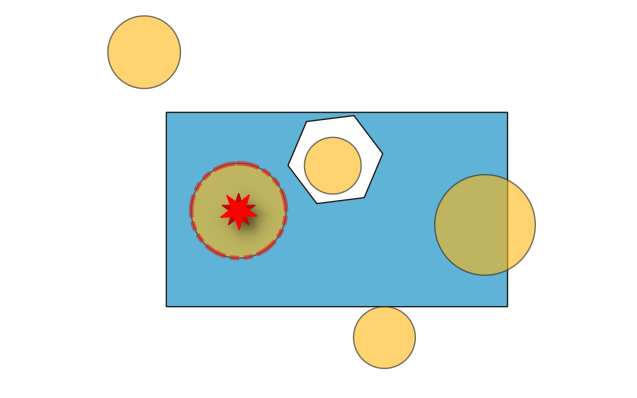
Fig. 24.3 Reporting errors on features inside a polygon.
Se även
Parametrar
Grundläggande parametrar
Etikett |
Namn |
Typ |
Beskrivning |
|---|---|---|---|
Inmatningslager |
|
[vektor: geometri] |
Layer with the geometries to check. |
Unique feature identifier |
|
[tabellfält: alla] |
Field storing unique values for feature identification. |
Polygon layers |
|
[vector: polygon][list] |
List of polygon layers to check against. |
Errors from contained features |
|
[vektor: punkt] Standard: |
Point layer representing the contained features. One of:
Här kan du också ändra filkodningen. |
Contained features Valfritt |
|
[vektor: samma som indata] Standard: |
Specification of the output layer containing features within the checked polygons. One of:
Här kan du också ändra filkodningen. |
Avancerade parametrar
Etikett |
Namn |
Typ |
Beskrivning |
|---|---|---|---|
Tolerans |
|
[numerisk: heltal] Standard: 8 |
Numerical precision of geometric operations, given as an integer n, meaning that two vertices less than 10-n apart (in map units) are considered to be merged. |
Utgångar
Etikett |
Namn |
Typ |
Beskrivning |
|---|---|---|---|
Errors from contained features |
|
[vektor: punkt] |
Output point layer representing the error locations and information. The output layer contains the following fields:
|
Contained features |
|
[vektor: samma som indata] |
Output layer containing features within the checked polygons.
Available fields are the same as in the |
Python-kod
Algorithm ID: native:checkgeometrycontained
import processing
processing.run("algorithm_id", {parameter_dictionary})
Algoritm-id visas när du håller muspekaren över algoritmen i verktygslådan Processing Toolbox. I parameter dictionary finns parameternamn och värden. Se Använda bearbetningsalgoritmer från konsolen för information om hur du kör bearbetningsalgoritmer från Python-konsolen.
24.1.3.6. Holes
Added in 3.42
Detects holes in polygon geometries and reports them as errors.
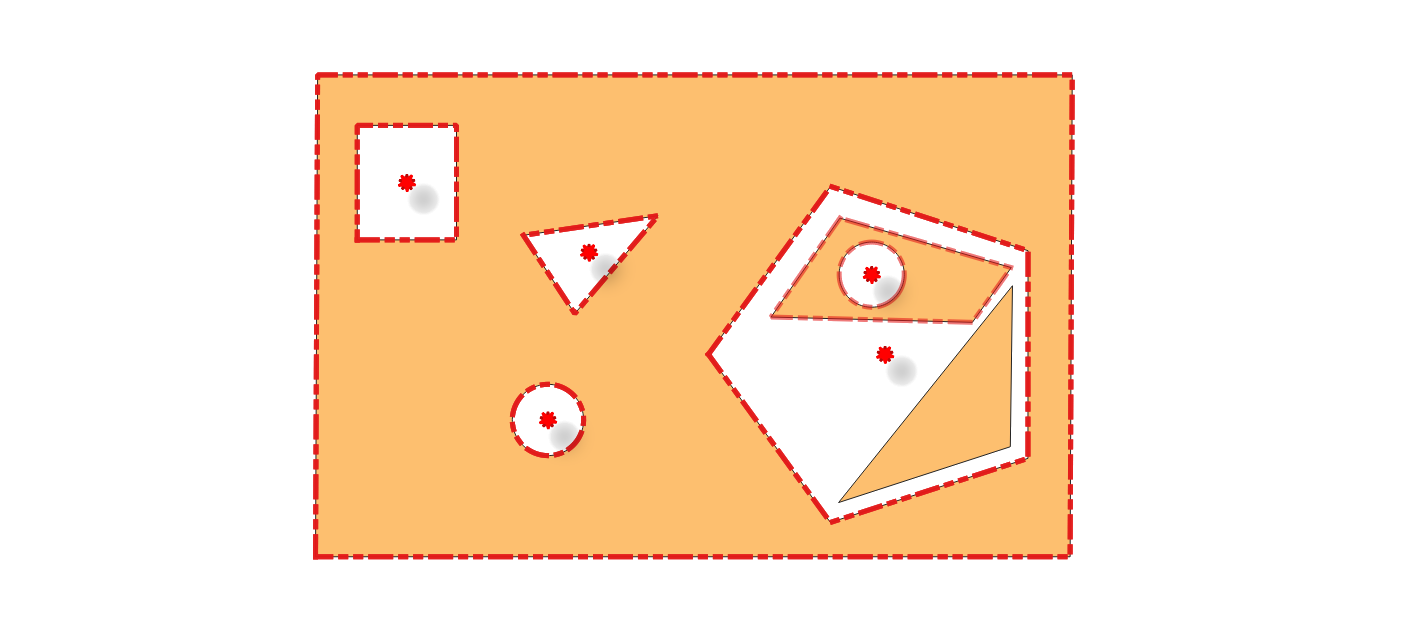
Fig. 24.4 Reporting errors for holes on a polygon feature.
Se även
Parametrar
Grundläggande parametrar
Etikett |
Namn |
Typ |
Beskrivning |
|---|---|---|---|
Inmatningslager |
|
[vektor: polygon] |
Layer with the geometries to check |
Unique feature identifier |
|
[tabellfält: alla] |
Field storing unique values for feature identification |
Holes errors |
|
[vektor: punkt] Standard: |
Specification of the output layer containing the errors location. One of:
Här kan du också ändra filkodningen. |
Polygons with holes Valfritt |
|
[vektor: polygon] Standard: |
Polygon layer with the features containing holes. One of:
Här kan du också ändra filkodningen. |
Avancerade parametrar
Etikett |
Namn |
Typ |
Beskrivning |
|---|---|---|---|
Tolerans |
|
[numerisk: heltal] Standard: 8 |
Numerical precision of geometric operations, given as an integer n, meaning that two vertices less than 10-n apart (in map units) are considered to be merged. |
Utgångar
Etikett |
Namn |
Typ |
Beskrivning |
|---|---|---|---|
Holes errors |
|
[vektor: punkt] |
Output point layer representing the error locations and information. The output layer contains the following fields:
|
Polygon with holes |
|
[vektor: polygon] |
Output polygon layer with features containing holes.
If no holes are found, the output layer will be empty.
Available fields are the same as in the |
Python-kod
Algorithm ID: native:checkgeometryhole
import processing
processing.run("algorithm_id", {parameter_dictionary})
Algoritm-id visas när du håller muspekaren över algoritmen i verktygslådan Processing Toolbox. I parameter dictionary finns parameternamn och värden. Se Använda bearbetningsalgoritmer från konsolen för information om hur du kör bearbetningsalgoritmer från Python-konsolen.
24.1.3.7. Lines intersecting each other
Added in 3.42
Checks intersections between line geometries within a layer. Intersections between two different lines are errors.
Parametrar
Grundläggande parametrar
Etikett |
Namn |
Typ |
Beskrivning |
|---|---|---|---|
Inmatningslager |
|
[vektor: linje] |
Layer with the geometries to check. |
Unique feature identifier |
|
[tabellfält: alla] |
Field storing unique values for feature identification. |
Intersection errors |
|
[vektor: punkt] Standard: |
Specification of the output layer containing the intersections location. One of:
Här kan du också ändra filkodningen. |
Intersecting feature Valfritt |
|
[vektor: linje] Standard: |
Specification of the output layer for features intersecting each other. One of:
Här kan du också ändra filkodningen. |
Avancerade parametrar
Etikett |
Namn |
Typ |
Beskrivning |
|---|---|---|---|
Tolerans |
|
[numerisk: heltal] Standard: 8 |
Numerical precision of geometric operations, given as an integer n, meaning that two vertices less than 10-n apart (in map units) are considered to be merged. |
Utgångar
Etikett |
Namn |
Typ |
Beskrivning |
|---|---|---|---|
Intersection errors |
|
[vektor: punkt] |
Output point layer representing the error locations and information. The output layer contains the following fields:
|
Intersecting feature |
|
[vektor: linje] |
Output layer containing, for each identified intersection, the feature (with same |
Python-kod
Algorithm ID: native:checkgeometrylineintersection
import processing
processing.run("algorithm_id", {parameter_dictionary})
Algoritm-id visas när du håller muspekaren över algoritmen i verktygslådan Processing Toolbox. I parameter dictionary finns parameternamn och värden. Se Använda bearbetningsalgoritmer från konsolen för information om hur du kör bearbetningsalgoritmer från Python-konsolen.
24.1.3.8. Lines intersecting other layer
Added in 3.42
Checks if the input line layer features intersect with the check layer features. An input feature that intersects with a check layer feature is an error.
Parametrar
Grundläggande parametrar
Etikett |
Namn |
Typ |
Beskrivning |
|---|---|---|---|
Inmatningslager |
|
[vektor: linje] |
Layer with the geometries to check. |
Unique feature identifier |
|
[tabellfält: alla] |
Field storing unique values for feature identification. |
Check layer |
|
[vektor: linje, polygon] |
Layer with the geometries to check against. |
Line intersecting other layer errors |
|
[vektor: punkt] Standard: |
Specification of the output point layer containing the locations of intersection errors. One of:
Här kan du också ändra filkodningen. |
Line intersecting other layer features Valfritt |
|
[line] Standard: |
Line layer with the input features that intersect features in the check layer. One of:
Här kan du också ändra filkodningen. |
Avancerade parametrar
Etikett |
Namn |
Typ |
Beskrivning |
|---|---|---|---|
Tolerans |
|
[numerisk: heltal] Standard: 8 |
Numerical precision of geometric operations, given as an integer n, meaning that two vertices less than 10-n apart (in map units) are considered to be merged. |
Utgångar
Etikett |
Namn |
Typ |
Beskrivning |
|---|---|---|---|
Line intersecting other layer errors |
|
[vektor: punkt] |
Output point layer representing the error location and information. The output layer contains the following fields:
|
Line intersecting other layer features |
|
[vektor: linje] |
Output layer containing, for each identified intersection, the input feature it belongs to.
If no intersections are found, the output layer will be empty.
Available fields are the same as in the |
Python-kod
Algorithm ID: native:checkgeometrylinelayerintersection
import processing
processing.run("algorithm_id", {parameter_dictionary})
Algoritm-id visas när du håller muspekaren över algoritmen i verktygslådan Processing Toolbox. I parameter dictionary finns parameternamn och värden. Se Använda bearbetningsalgoritmer från konsolen för information om hur du kör bearbetningsalgoritmer från Python-konsolen.
24.1.3.9. Missing vertices along borders
Added in 3.42
Checks for missing vertices along polygon borders. To be topologically correct, a vertex at the junction of two polygons must be present on both polygons. Missing vertices are errors.
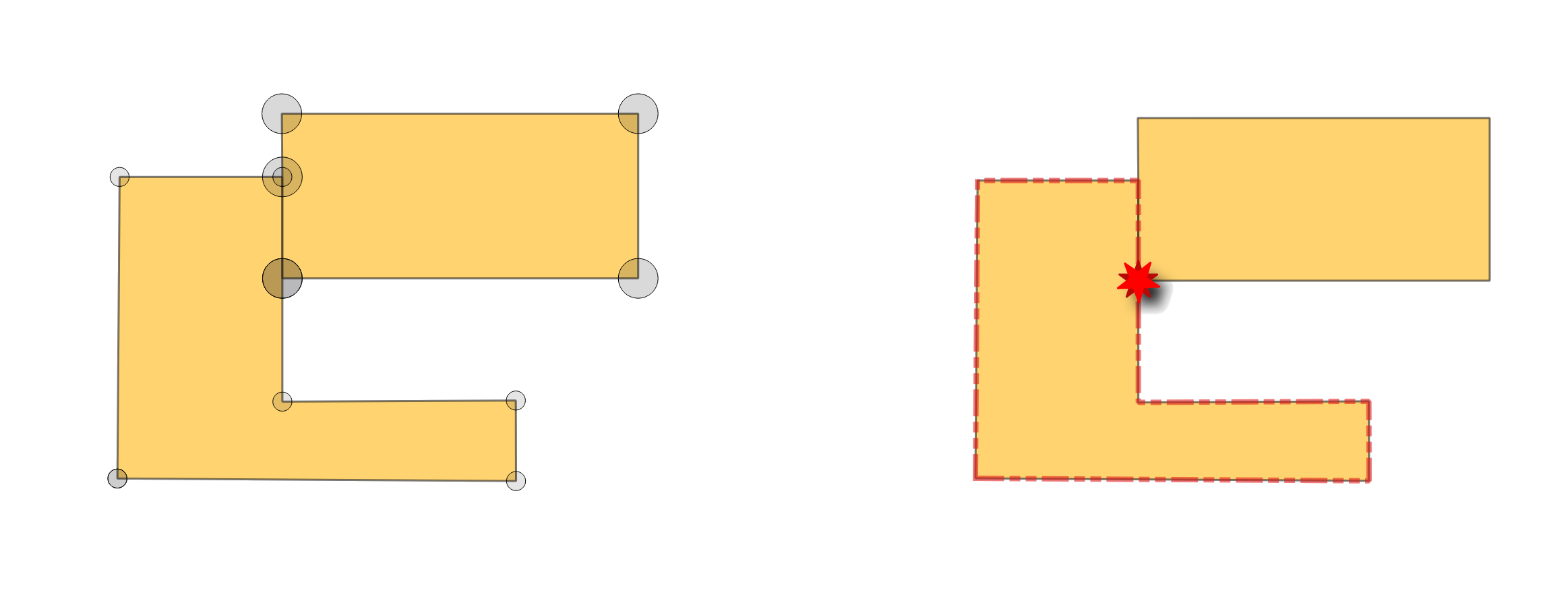
Fig. 24.5 Reporting errors for missing vertices on polygon features.
Parametrar
Grundläggande parametrar
Etikett |
Namn |
Typ |
Beskrivning |
|---|---|---|---|
Inmatningslager |
|
[vektor: polygon] |
Layer with the geometries to check. |
Unique feature identifier |
|
[tabellfält: alla] |
Field storing unique values for feature identification. |
Missing vertices errors |
|
[vektor: punkt] Standard: |
Specification of the output layer containing the errors location. One of:
Här kan du också ändra filkodningen. |
Missing vertices features Valfritt |
|
[vektor: polygon] Standard: |
Polygon layer with the features whose vertices are missing. One of:
Här kan du också ändra filkodningen. |
Avancerade parametrar
Etikett |
Namn |
Typ |
Beskrivning |
|---|---|---|---|
Tolerans |
|
[numerisk: heltal] Standard: 8 |
Numerical precision of geometric operations, given as an integer n, meaning that two vertices less than 10-n apart (in map units) are considered to be merged. |
Utgångar
Etikett |
Namn |
Typ |
Beskrivning |
|---|---|---|---|
Missing vertices errors |
|
[vektor: punkt] |
Output point layer representing the error locations and information. The output layer contains the following fields:
|
Missing vertices features |
|
[vektor: polygon] |
Output polygon layer with features whose vertices are missing.
There will be as many (duplicate) features as there are missing vertices in each geometry.
If no vertices are missing, the output layer will be empty.
Available fields are the same as in the |
Python-kod
Algorithm ID: native:checkgeometrymissingvertex
import processing
processing.run("algorithm_id", {parameter_dictionary})
Algoritm-id visas när du håller muspekaren över algoritmen i verktygslådan Processing Toolbox. I parameter dictionary finns parameternamn och värden. Se Använda bearbetningsalgoritmer från konsolen för information om hur du kör bearbetningsalgoritmer från Python-konsolen.
24.1.3.10. Overlaps
Added in 3.42
Calculates overlapping areas in polygon geometries, and reports areas smaller than a given minimum as errors.
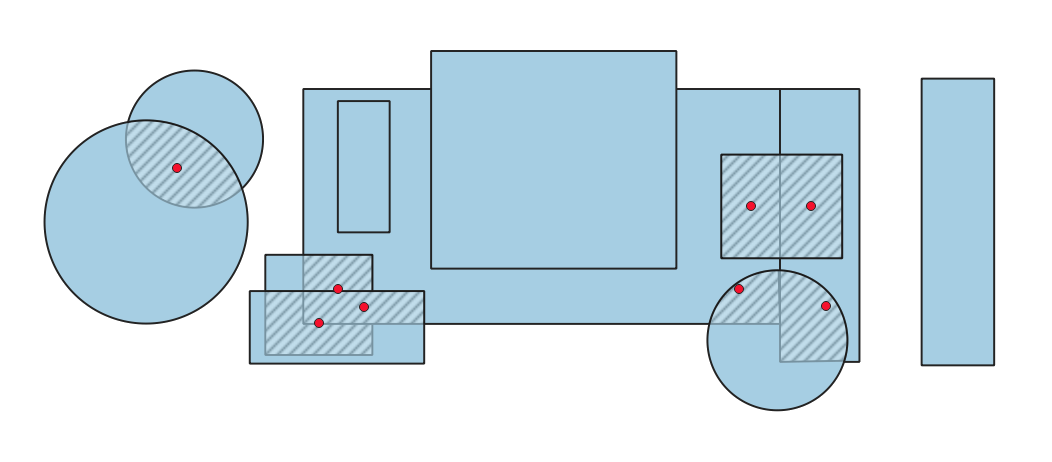
Fig. 24.6 Hashed polygons indicate overlapping areas smaller than the specified minimum.
Se även
Parametrar
Grundläggande parametrar
Etikett |
Namn |
Typ |
Beskrivning |
|---|---|---|---|
Inmatningslager |
|
[vektor: polygon] |
Layer with the geometries to check. |
Unique feature identifier |
|
[tabellfält: alla] |
Field storing unique values for feature identification. |
Minimum overlap area |
|
[numerisk: dubbel] |
Minimum area of the overlap to be reported as an error. If set to 0, all overlaps are reported. |
Overlap errors |
|
[vektor: punkt] Standard: |
Specification of the output layer containing centroid points of the overlapping areas. One of:
Här kan du också ändra filkodningen. |
Overlap features Valfritt |
|
[vektor: polygon] Standard: |
Specification of the output layer for features containing overlaps. One of:
Här kan du också ändra filkodningen. |
Avancerade parametrar
Etikett |
Namn |
Typ |
Beskrivning |
|---|---|---|---|
Tolerans |
|
[numerisk: heltal] Standard: 8 |
Numerical precision of geometric operations, given as an integer n, meaning that two vertices less than 10-n apart (in map units) are considered to be merged. |
Utgångar
Etikett |
Namn |
Typ |
Beskrivning |
|---|---|---|---|
Overlap errors |
|
[vektor: punkt] |
Output point layer representing the error locations and information. The output layer contains the following fields:
|
Overlap features |
|
[vektor: polygon] |
Output layer containing the overlapping areas.
Available fields are the same as in the |
Python-kod
Algorithm ID: native:checkgeometryoverlap
import processing
processing.run("algorithm_id", {parameter_dictionary})
Algoritm-id visas när du håller muspekaren över algoritmen i verktygslådan Processing Toolbox. I parameter dictionary finns parameternamn och värden. Se Använda bearbetningsalgoritmer från konsolen för information om hur du kör bearbetningsalgoritmer från Python-konsolen.
24.1.3.11. Points outside lines
Added in 3.42
Checks if the points in the input layer are covered by a line in the selected line layers. A point not covered by a line is an error.
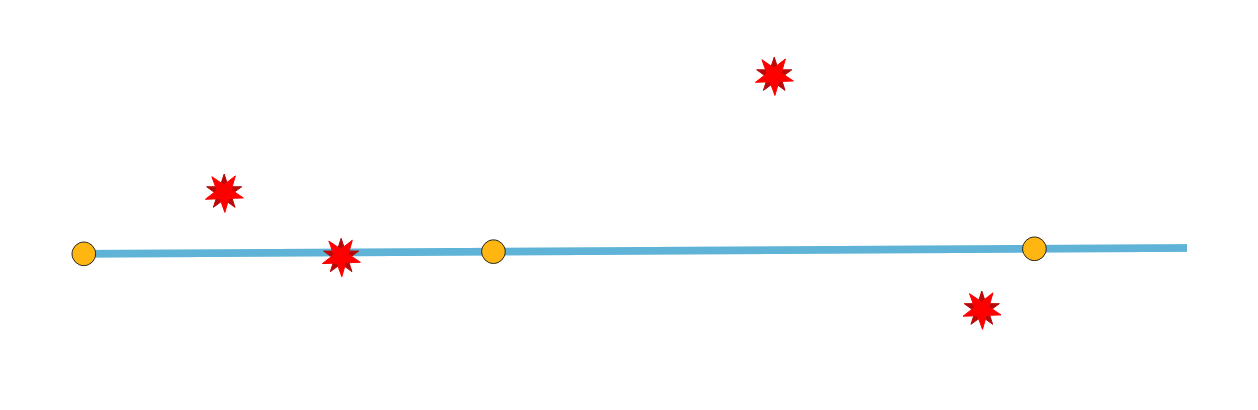
Fig. 24.7 Reporting errors on points not covered by a line.
Parametrar
Grundläggande parametrar
Etikett |
Namn |
Typ |
Beskrivning |
|---|---|---|---|
Inmatningslager |
|
[vektor: punkt] |
Layer with the geometries to check. |
Unique feature identifier |
|
[tabellfält: alla] |
Field storing unique values for feature identification. |
Line layers |
|
[vector: line][list] |
Layer(s) with the lines to check against. |
Points not covered by a line |
|
[vektor: punkt] Standard: |
Specification of the output layer containing points not covered by a line. One of:
Här kan du också ändra filkodningen. |
Avancerade parametrar
Etikett |
Namn |
Typ |
Beskrivning |
|---|---|---|---|
Tolerans |
|
[numerisk: heltal] Standard: 8 |
Numerical precision of geometric operations, given as an integer n, meaning that two vertices less than 10-n apart (in map units) are considered to be merged. |
Utgångar
Etikett |
Namn |
Typ |
Beskrivning |
|---|---|---|---|
Points not covered by a line |
|
[vektor: punkt] |
Output point layer representing the error locations and information. The output layer contains the following fields:
|
Python-kod
Algorithm ID: native:checkgeometrypointcoveredbyline
import processing
processing.run("algorithm_id", {parameter_dictionary})
Algoritm-id visas när du håller muspekaren över algoritmen i verktygslådan Processing Toolbox. I parameter dictionary finns parameternamn och värden. Se Använda bearbetningsalgoritmer från konsolen för information om hur du kör bearbetningsalgoritmer från Python-konsolen.
24.1.3.12. Points outside polygons
Added in 3.42
Checks if points from the input layer are in polygons from the selected polygon layers. Points that are not fully inside polygons are errors.
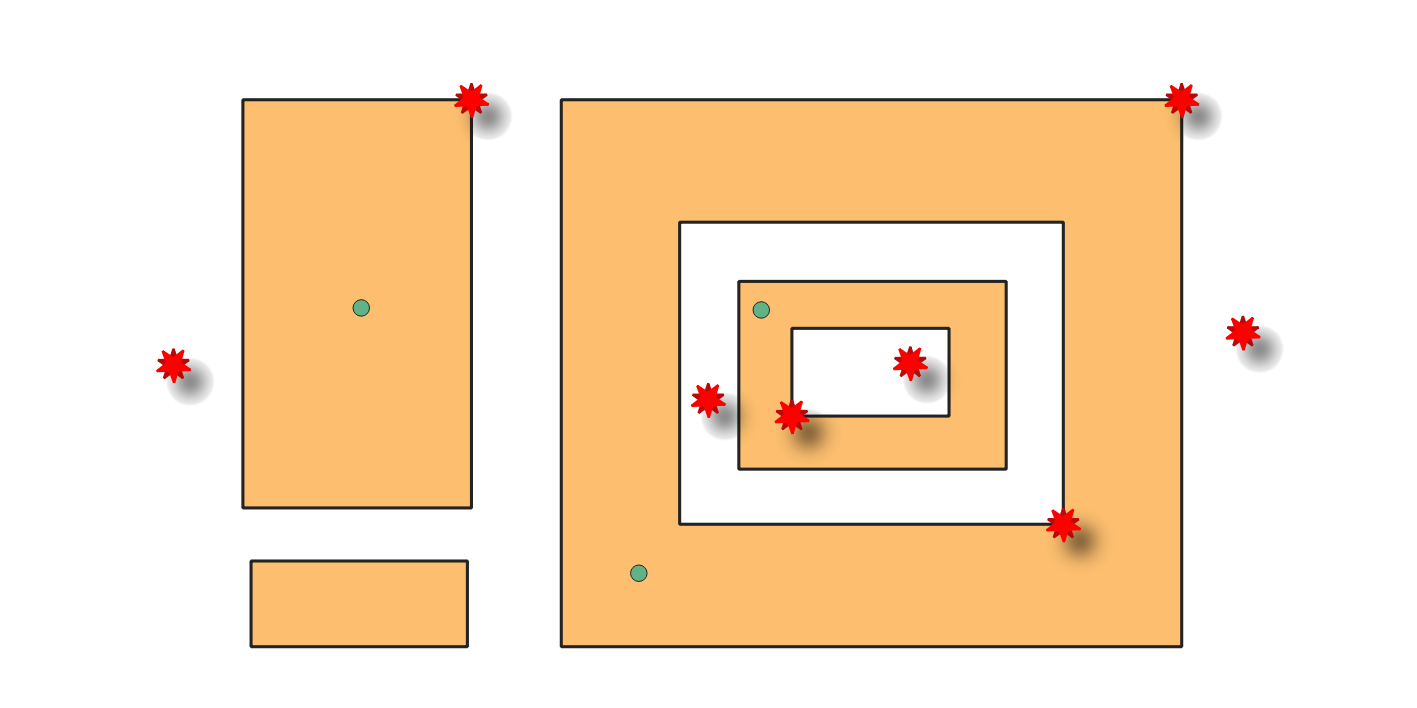
Fig. 24.8 Reporting errors on points outside polygons.
Parametrar
Grundläggande parametrar
Etikett |
Namn |
Typ |
Beskrivning |
|---|---|---|---|
Inmatningslager |
|
[vektor: punkt] |
Layer with the geometries to check. |
Unique feature identifier |
|
[tabellfält: alla] |
Field storing unique values for feature identification. |
Polygon layers |
|
[vector: polygon][list] |
Layer(s) with the polygons to check against. |
Points outside polygons errors |
|
[vektor: punkt] Standard: |
Specification of the output layer containing points outside the polygons. One of:
Här kan du också ändra filkodningen. |
Avancerade parametrar
Etikett |
Namn |
Typ |
Beskrivning |
|---|---|---|---|
Tolerans |
|
[numerisk: heltal] Standard: 8 |
Numerical precision of geometric operations, given as an integer n, meaning that two vertices less than 10-n apart (in map units) are considered to be merged. |
Utgångar
Etikett |
Namn |
Typ |
Beskrivning |
|---|---|---|---|
Points outside polygons errors |
|
[vektor: punkt] |
Output point layer representing the error locations and information. The output layer contains the following fields:
|
Python-kod
Algorithm ID: native:checkgeometrypointinpolygon
import processing
processing.run("algorithm_id", {parameter_dictionary})
Algoritm-id visas när du håller muspekaren över algoritmen i verktygslådan Processing Toolbox. I parameter dictionary finns parameternamn och värden. Se Använda bearbetningsalgoritmer från konsolen för information om hur du kör bearbetningsalgoritmer från Python-konsolen.
24.1.3.13. Self-contacts
Added in 3.42
Checks if the geometry has self contact points (in line or polygon), i.e., a vertex that touches more than two segments of the same ring. Self contacts are errors.
Observera
This algorithm detects invalid polygon geometries (self-contacts).
To ensure these invalid features are not filtered out before processing, open
Advanced options next to the Input layer and set
Invalid feature filtering to Do not Filter (Better Performance).
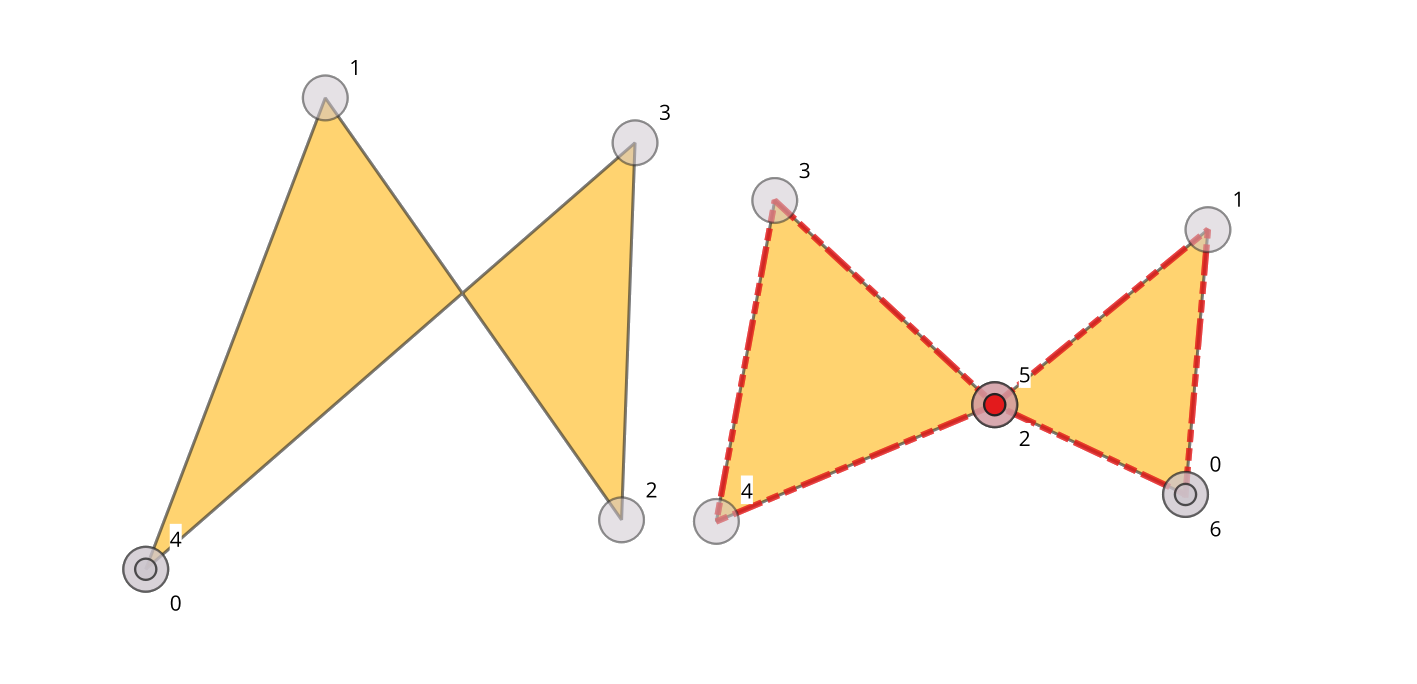
Fig. 24.9 Self-intersection vs self-contact.
Se även
Parametrar
Grundläggande parametrar
Etikett |
Namn |
Typ |
Beskrivning |
|---|---|---|---|
Inmatningslager |
|
[vektor: linje, polygon] |
Layer with the geometries to check. |
Unique feature identifier |
|
[tabellfält: alla] |
Field storing unique values for feature identification. |
Self contact error points |
|
[vektor: punkt] Standard: |
Specification of the output layer containing the errors location. One of:
Här kan du också ändra filkodningen. |
Self contact features Valfritt |
|
[samma som inmatning] Standard: |
Line or polygon layer containing self-contact features. One of:
Här kan du också ändra filkodningen. |
Avancerade parametrar
Etikett |
Namn |
Typ |
Beskrivning |
|---|---|---|---|
Tolerans |
|
[numerisk: heltal] Standard: 8 |
Numerical precision of geometric operations, given as an integer n, meaning that two vertices less than 10-n apart (in map units) are considered to be merged. |
Utgångar
Etikett |
Namn |
Typ |
Beskrivning |
|---|---|---|---|
Self contact error points |
|
[vektor: punkt] |
Output point layer representing the error locations and information. The output layer contains the following fields:
|
Self contact features |
|
[vektor: samma som indata] |
Output polygon or line layer with features containing the self-contact features.
If no self-contact features are found, the output layer will be empty.
Available fields are the same as in the |
Python-kod
Algorithm ID: native:checkgeometryselfcontact
import processing
processing.run("algorithm_id", {parameter_dictionary})
Algoritm-id visas när du håller muspekaren över algoritmen i verktygslådan Processing Toolbox. I parameter dictionary finns parameternamn och värden. Se Använda bearbetningsalgoritmer från konsolen för information om hur du kör bearbetningsalgoritmer från Python-konsolen.
24.1.3.14. Self-intersections
Added in 3.42
Detects self-intersections in line or polygon geometries, and reports them as errors. Self-intersections occur when the segments of a geometry cross over each other without having a common vertex.
Observera
This algorithm detects invalid polygon geometries (self-intersections).
To ensure these invalid features are not filtered out before processing, open
Advanced options next to the Input layer and set
Invalid feature filtering to Do not Filter (Better Performance).
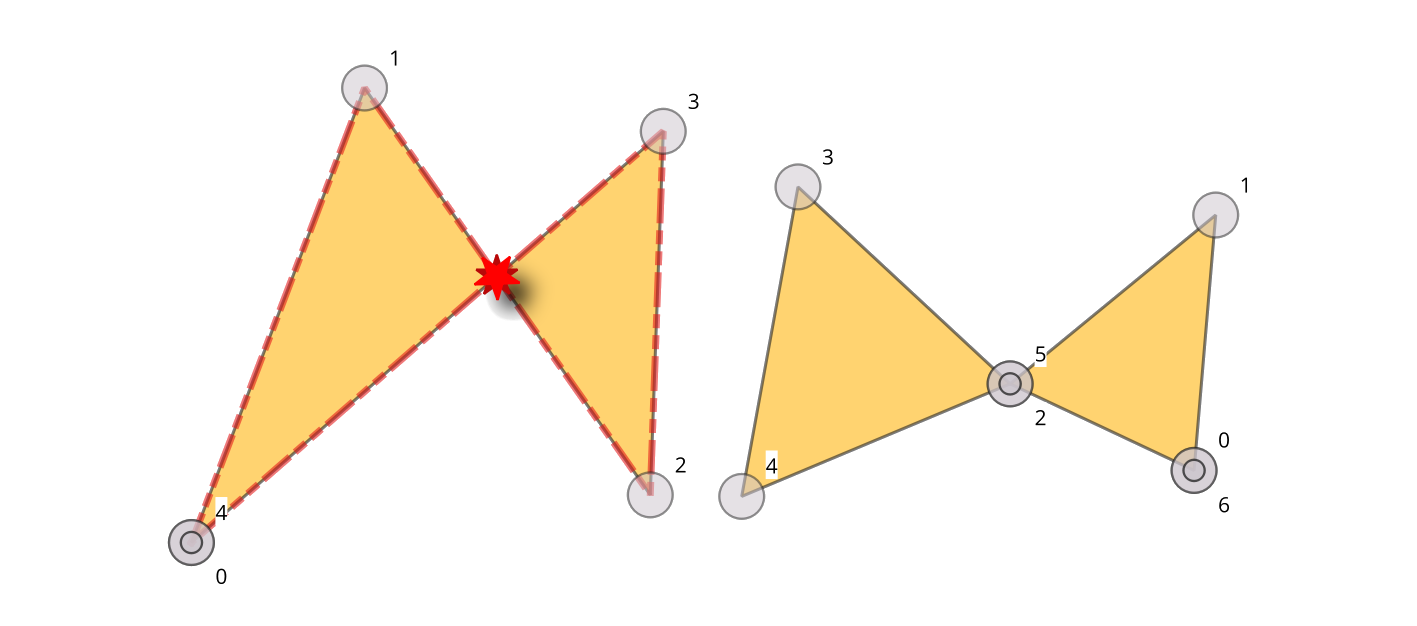
Fig. 24.10 Self-intersection vs self-contact.
Parametrar
Grundläggande parametrar
Etikett |
Namn |
Typ |
Beskrivning |
|---|---|---|---|
Inmatningslager |
|
[vektor: linje, polygon] |
Layer with the geometries to check |
Unique feature identifier |
|
[tabellfält: alla] |
Field storing unique values for feature identification |
Self-intersecting errors |
|
[vektor: punkt] Standard: |
Specification of the output layer containing the errors location. One of:
Här kan du också ändra filkodningen. |
Self-intersecting features Valfritt |
|
[samma som inmatning] Standard: |
Line or polygon layer containing self-intersected features. One of:
Här kan du också ändra filkodningen. |
Avancerade parametrar
Etikett |
Namn |
Typ |
Beskrivning |
|---|---|---|---|
Tolerans |
|
[numerisk: heltal] Standard: 8 |
Numerical precision of geometric operations, given as an integer n, meaning that two vertices less than 10-n apart (in map units) are considered to be merged. |
Utgångar
Etikett |
Namn |
Typ |
Beskrivning |
|---|---|---|---|
Self-intersecting errors |
|
[vektor: punkt] |
Output point layer representing the error locations and information. The output layer contains the following fields:
|
Self-intersecting features |
|
[vektor: linje, polygon] |
Output polygon or line layer with features containing the self-intersecting features.
If no self-intersecting features are found, the output layer will be empty.
Available fields are the same as in the |
Python-kod
Algorithm ID: native:checkgeometryselfintersection
import processing
processing.run("algorithm_id", {parameter_dictionary})
Algoritm-id visas när du håller muspekaren över algoritmen i verktygslådan Processing Toolbox. I parameter dictionary finns parameternamn och värden. Se Använda bearbetningsalgoritmer från konsolen för information om hur du kör bearbetningsalgoritmer från Python-konsolen.
24.1.3.15. Sliver polygons
Added in 3.42
Detects sliver polygons in a polygon layer, i.e., polygons with a thinness greater than a specified value.
The thinness is the ratio between the area of the minimum square containing the polygon and the area of the polygon itself (a square has a thinness value of 1). The thinness value is between 1 and +infinity. A maximum area can be set for limiting the checks to polygons of a lower area. Polygons having a thinness higher than the maximum thinness are errors. To fix sliver polygons, use the Fix small polygons algorithm.
Observera
This algorithm detects invalid polygon geometries (sliver polygons).
To ensure these invalid features are not filtered out before processing, open
Advanced options next to the Input layer and set
Invalid feature filtering to Do not Filter (Better Performance).
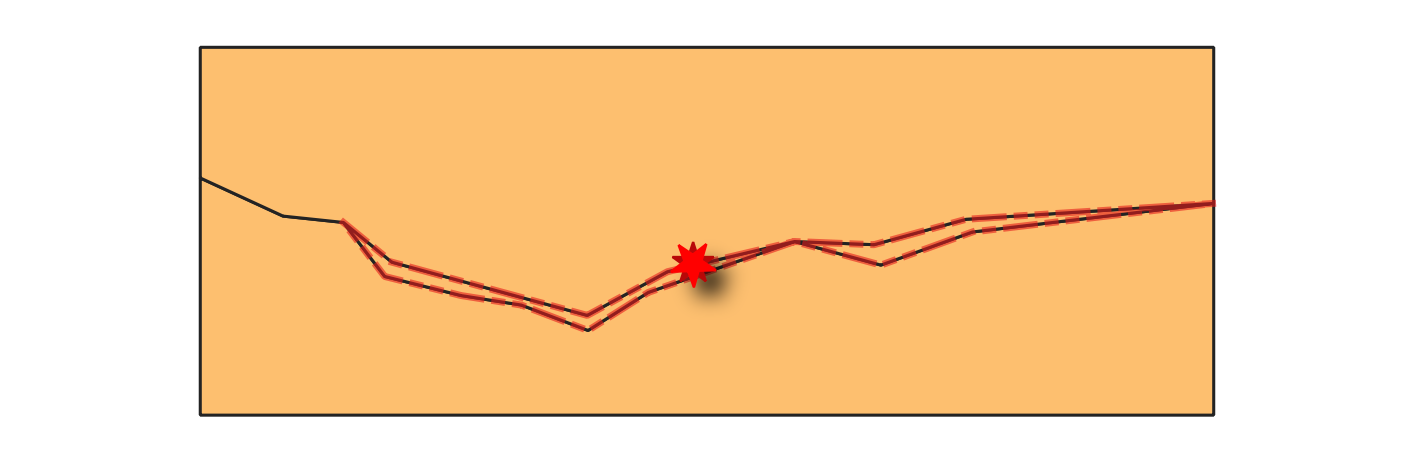
Fig. 24.11 Reporting errors on features with sliver polygons.
Se även
Parametrar
Grundläggande parametrar
Etikett |
Namn |
Typ |
Beskrivning |
|---|---|---|---|
Inmatningslager |
|
[vektor: polygon] |
Layer with the geometries to check. |
Unique feature identifier |
|
[tabellfält: alla] |
Field storing unique values for feature identification. |
Maximum thinness |
|
[numerisk: dubbel] Default: 20.0 |
Maximum thinness value of a polygon to be considered valid. Any polygon with a thinness value above this threshold is reported as error. |
Maximum area (map units squared) |
|
[numerisk: dubbel] Standard: 0,0 |
Maximum area of a polygon to be checked (in map units). Any polygon with an area above this threshold is skipped. A value of 0 means all polygons are checked. |
Sliver polygon errors |
|
[vektor: punkt] Standard: |
Specification of the output layer containing the centroid points of sliver polygon features. One of:
Här kan du också ändra filkodningen. |
Sliver polygon features Valfritt |
|
[vektor: polygon] Standard: |
Polygon layer containing sliver polygon features. One of:
Här kan du också ändra filkodningen. |
Avancerade parametrar
Etikett |
Namn |
Typ |
Beskrivning |
|---|---|---|---|
Tolerans |
|
[numerisk: heltal] Standard: 8 |
Numerical precision of geometric operations, given as an integer n, meaning that two vertices less than 10-n apart (in map units) are considered to be merged. |
Utgångar
Etikett |
Namn |
Typ |
Beskrivning |
|---|---|---|---|
Sliver polygon errors |
|
[vektor: punkt] |
Output point layer representing the error locations and information. The output layer contains the following fields:
|
Sliver polygon features |
|
[vektor: polygon] |
Output layer with features containing the sliver polygons.
If no sliver polygon features are found, the output layer will be empty.
Available fields are the same as in the |
Python-kod
Algorithm ID: native:checkgeometrysliverpolygon
import processing
processing.run("algorithm_id", {parameter_dictionary})
Algoritm-id visas när du håller muspekaren över algoritmen i verktygslådan Processing Toolbox. I parameter dictionary finns parameternamn och värden. Se Använda bearbetningsalgoritmer från konsolen för information om hur du kör bearbetningsalgoritmer från Python-konsolen.
24.1.3.16. Small angles
Added in 3.42
Compares the angles within line or polygon geometries to a specified threshold, and reports as error any angle below that value.
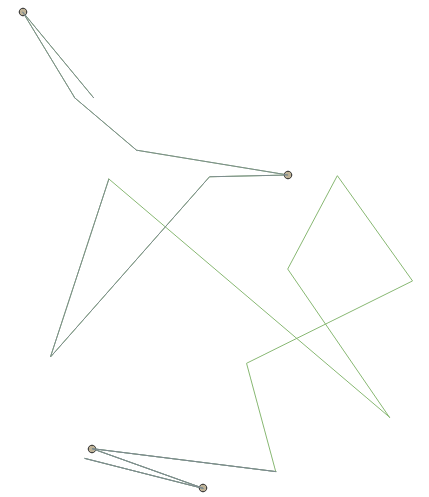
Fig. 24.12 Reporting errors on a line feature for angles lower than 15°.
Se även
Parametrar
Grundläggande parametrar
Etikett |
Namn |
Typ |
Beskrivning |
|---|---|---|---|
Inmatningslager |
|
[vektor: linje, polygon] |
Layer with the geometries to check. |
Unique feature identifier |
|
[tabellfält: alla] |
Field storing unique values for feature identification. |
Minimum angle |
|
[numerisk: dubbel] |
Allowed minimum angle between adjacent segments in a feature’s geometry. Any angle below this threshold is reported as error. |
Small angle errors |
|
[vektor: punkt] Standard: |
Specification of the output layer containing the errors location. One of:
Här kan du också ändra filkodningen. |
Avancerade parametrar
Etikett |
Namn |
Typ |
Beskrivning |
|---|---|---|---|
Tolerans |
|
[numerisk: heltal] Standard: 8 |
Numerical precision of geometric operations, given as an integer n, meaning that two vertices less than 10-n apart (in map units) are considered to be merged. |
Utgångar
Etikett |
Namn |
Typ |
Beskrivning |
|---|---|---|---|
Small angle errors |
|
[vektor: punkt] |
Output point layer representing the error locations and information. The output layer contains the following fields:
|
Python-kod
Algorithm ID: native:checkgeometryangle
import processing
processing.run("algorithm_id", {parameter_dictionary})
Algoritm-id visas när du håller muspekaren över algoritmen i verktygslådan Processing Toolbox. I parameter dictionary finns parameternamn och värden. Se Använda bearbetningsalgoritmer från konsolen för information om hur du kör bearbetningsalgoritmer från Python-konsolen.
24.1.3.17. Small polygons
Added in 3.42
Detects polygon features whose area is below a specified value as errors.
Observera
This algorithm detects invalid polygon geometries (small polygons).
To ensure these invalid features are not filtered out before processing, open
Advanced options next to the Input layer and set
Invalid feature filtering to Do not Filter (Better Performance).
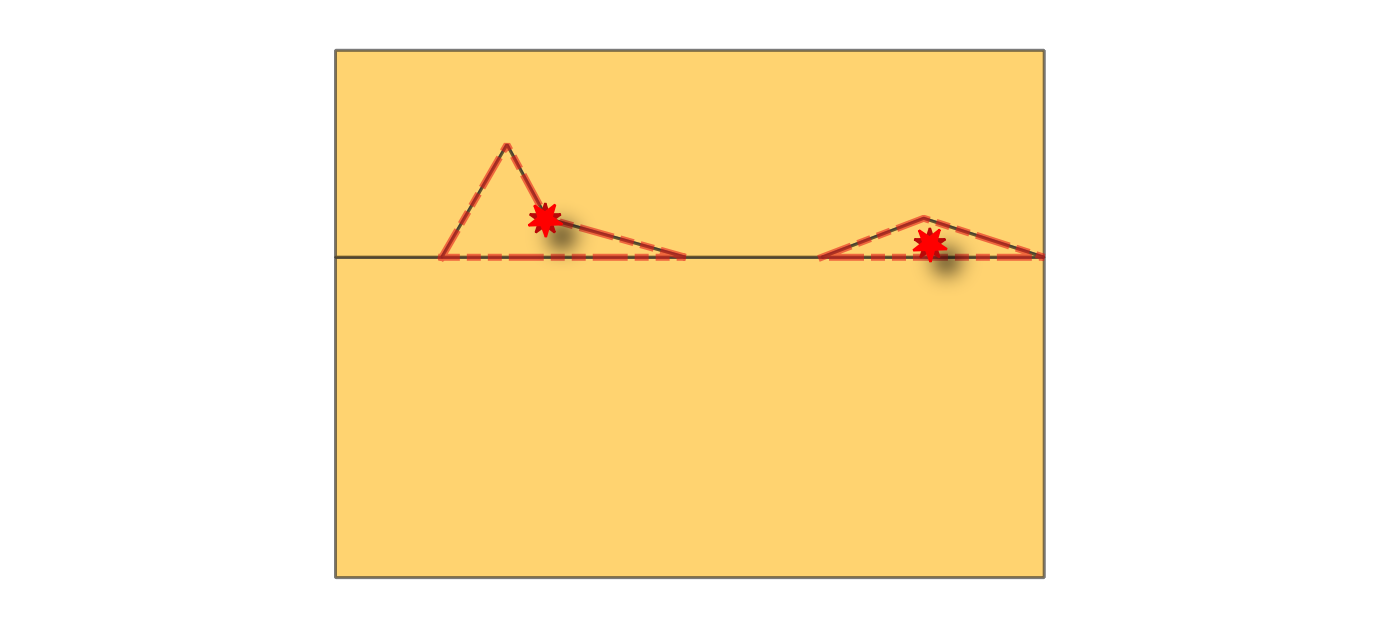
Fig. 24.13 Reporting errors on features with small polygons (below given area threshold).
Se även
Parametrar
Grundläggande parametrar
Etikett |
Namn |
Typ |
Beskrivning |
|---|---|---|---|
Inmatningslager |
|
[vektor: polygon] |
Layer with the geometries to check. |
Unique feature identifier |
|
[tabellfält: alla] |
Field storing unique values for feature identification. |
Area threshold |
|
[numerisk: dubbel] Standard: 0 |
Minimum area of a polygon to be considered valid, in selected units. Any polygon with an area below this threshold is reported as error. |
Small polygons errors |
|
[vektor: punkt] Standard: |
Specification of the output layer containing centroid points of small polygons. One of:
Här kan du också ändra filkodningen. |
Small polygons features Valfritt |
|
[vektor: polygon] Standard: |
Specification of the output layer for features containing small polygon features. One of:
Här kan du också ändra filkodningen. |
Avancerade parametrar
Etikett |
Namn |
Typ |
Beskrivning |
|---|---|---|---|
Tolerans |
|
[numerisk: heltal] Standard: 8 |
Numerical precision of geometric operations, given as an integer n, meaning that two vertices less than 10-n apart (in map units) are considered to be merged. |
Utgångar
Etikett |
Namn |
Typ |
Beskrivning |
|---|---|---|---|
Small polygons errors |
|
[vektor: punkt] |
Output point layer representing the error locations and information. The output layer contains the following fields:
|
Small polygons features |
|
[vektor: polygon] |
Output polygon layer with features containing the small polygon features.
If no small polygon features are found, the output layer will be empty.
Available fields are the same as in the |
Python-kod
Algorithm ID: native:checkgeometryarea
import processing
processing.run("algorithm_id", {parameter_dictionary})
Algoritm-id visas när du håller muspekaren över algoritmen i verktygslådan Processing Toolbox. I parameter dictionary finns parameternamn och värden. Se Använda bearbetningsalgoritmer från konsolen för information om hur du kör bearbetningsalgoritmer från Python-konsolen.
24.1.3.18. Small gaps
Added in 3.42
Checks for gaps between polygons in the input layer. Gaps with an area smaller than the gap threshold are reported as errors. If an allowed gaps layer is provided, the algorithm ignores gaps that fall entirely within polygons from this layer. An optional buffer can be applied to the allowed gaps.
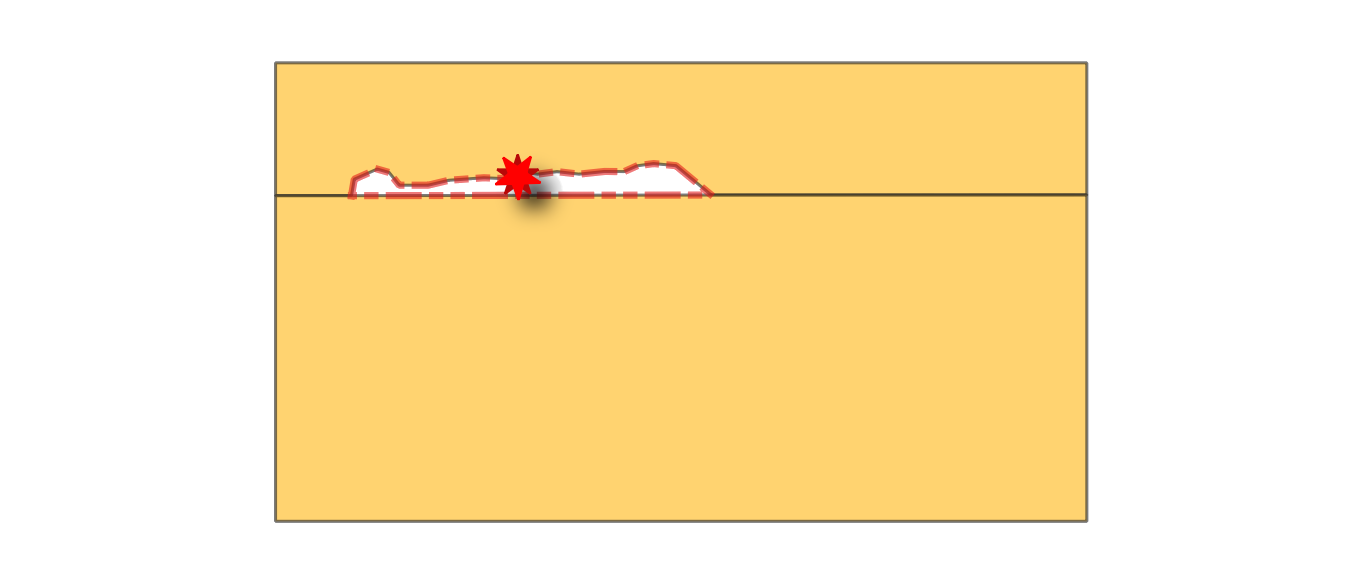
Fig. 24.14 Reporting errors on polygon features for gaps smaller than the specified threshold.
Se även
Parametrar
Grundläggande parametrar
Etikett |
Namn |
Typ |
Beskrivning |
|---|---|---|---|
Inmatningslager |
|
[vektor: polygon] |
Layer with the geometries to check. |
Unique feature identifier |
|
[tabellfält: alla] |
Field storing unique values for feature identification. |
Gap threshold |
|
[numerisk: dubbel] Standard: 0,0 |
Maximum area of gaps to be reported as errors, in map units. If set to 0, all the gaps are reported. |
Allowed gaps layer Valfritt |
|
[vektor: polygon] |
Optional layer specifying polygons whose areas should be ignored during the gap check. Gaps that fall entirely within these polygons will not be reported as errors. |
Allowed gaps buffer Valfritt |
|
[numerisk: dubbel] Standard: 0,0 |
Buffer distance to apply to the allowed gaps layer, in selected units. Gaps located within this buffered area are ignored. Allows adding a spatial tolerance around allowed gaps to avoid reporting near-boundary gaps as errors. |
Neighbors layer |
|
[vektor: tabell] Standard: |
Specification of the output table representing the gap ID and the unique ID of its neighbor features. One of:
Här kan du också ändra filkodningen. |
Gap errors Valfritt |
|
[vektor: punkt] Standard: |
Specification of the output layer containing the centroid points of the gaps. One of:
Här kan du också ändra filkodningen. |
Gap features |
|
[vektor: polygon] Standard: |
Specification of the output layer containing the gap geometries. One of:
Här kan du också ändra filkodningen. |
Avancerade parametrar
Etikett |
Namn |
Typ |
Beskrivning |
|---|---|---|---|
Tolerans |
|
[numerisk: heltal] Standard: 8 |
Numerical precision of geometric operations, given as an integer n, meaning that two vertices less than 10-n apart (in map units) are considered to be merged. |
Utgångar
Etikett |
Namn |
Typ |
Beskrivning |
|---|---|---|---|
Neighbors layer |
|
[vektor: tabell] |
A 1–N relational table, meaning that one gap can be associated with multiple neighboring polygons. The output table contains the following fields:
|
Gap errors |
|
[vektor: punkt] |
Output point layer representing the error locations and information. The output layer contains the following fields:
|
Gap features |
|
[vektor: polygon] |
Output layer containing the gap geometries.
Available fields are the same as in the |
Python-kod
Algorithm ID: native:checkgeometrygap
import processing
processing.run("algorithm_id", {parameter_dictionary})
Algoritm-id visas när du håller muspekaren över algoritmen i verktygslådan Processing Toolbox. I parameter dictionary finns parameternamn och värden. Se Använda bearbetningsalgoritmer från konsolen för information om hur du kör bearbetningsalgoritmer från Python-konsolen.
24.1.3.19. Small segments
Added in 3.42
Calculates length of individual segments in line or polygon geometries, and reports segments shorter than a minimum length as errors.
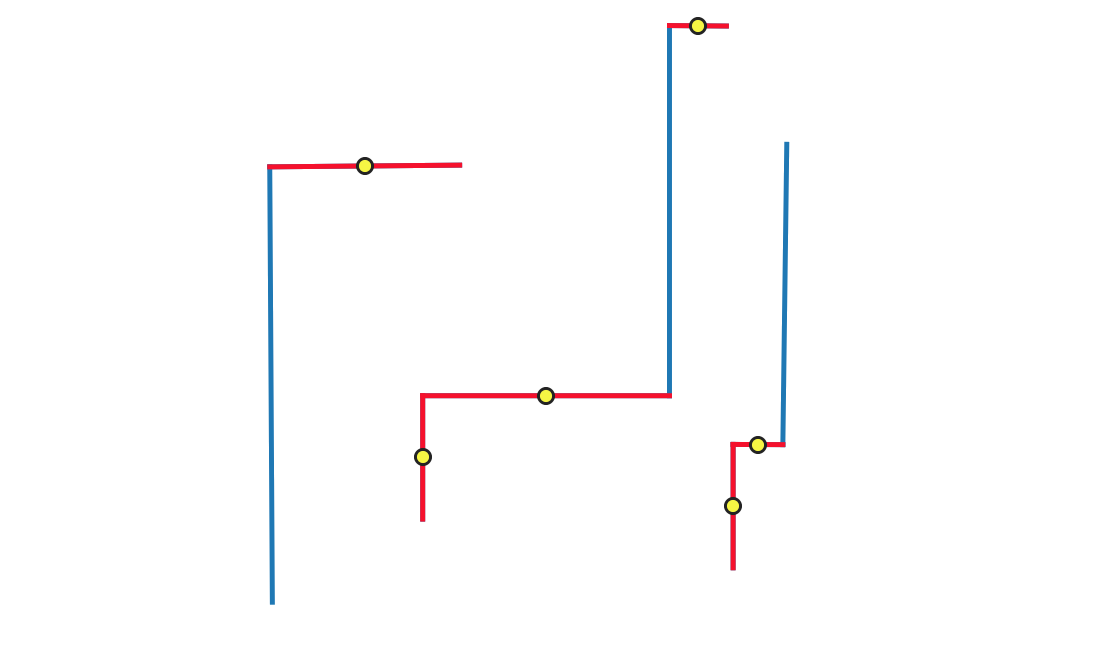
Fig. 24.15 Reporting errors (in red) on single line segments shorter than the given threshold.
Se även
Parametrar
Grundläggande parametrar
Etikett |
Namn |
Typ |
Beskrivning |
|---|---|---|---|
Inmatningslager |
|
[vektor: linje, polygon] |
Layer with the geometries to check. |
Unique feature identifier |
|
[tabellfält: alla] |
Field storing unique values for feature identification. |
Minimum segment length |
|
[numerisk: dubbel] Standard: 0,0 |
Minimum length of segments to be considered valid, in map units. |
Short segments errors |
|
[vektor: punkt] Standard: |
Specification of the output layer containing centroid of short segments. One of:
Här kan du också ändra filkodningen. |
Short segments features Valfritt |
|
[vektor: samma som indata] Standard: |
Specification of the output layer for features containing short segments. One of:
Här kan du också ändra filkodningen. |
Avancerade parametrar
Etikett |
Namn |
Typ |
Beskrivning |
|---|---|---|---|
Tolerans |
|
[numerisk: heltal] Standard: 8 |
Numerical precision of geometric operations, given as an integer n, meaning that two vertices less than 10-n apart (in map units) are considered to be merged. |
Utgångar
Etikett |
Namn |
Typ |
Beskrivning |
|---|---|---|---|
Short segments errors |
|
[vektor: punkt] |
Output point layer representing the error locations and information. The output layer contains the following fields:
|
Short segments features |
|
[vektor: samma som indata] |
Output layer containing, for each identified short segment, the feature it belongs to.
Available fields are the same as in the |
Python-kod
Algorithm ID: native:checkgeometrysegmentlength
import processing
processing.run("algorithm_id", {parameter_dictionary})
Algoritm-id visas när du håller muspekaren över algoritmen i verktygslådan Processing Toolbox. I parameter dictionary finns parameternamn och värden. Se Använda bearbetningsalgoritmer från konsolen för information om hur du kör bearbetningsalgoritmer från Python-konsolen.
24.1.3.20. Strictly multipart
Added in 3.42
Checks if multipart geometries have more than one part. Multipart geometries with only one part are errors.
Se även
Parametrar
Grundläggande parametrar
Etikett |
Namn |
Typ |
Beskrivning |
|---|---|---|---|
Inmatningslager |
|
[vektor: geometri] |
Layer with the geometries to check. |
Unique feature identifier |
|
[tabellfält: alla] |
Field storing unique values for feature identification. |
One-part geometry errors |
|
[vektor: punkt] Standard: |
Specification of the output layer containing centroid of the multipart geometries that have only one part. One of:
Här kan du också ändra filkodningen. |
One-part geometry features Valfritt |
|
[vektor: samma som indata] Standard: |
Specification of the output layer for features containing multipart geometries that have only one part. One of:
Här kan du också ändra filkodningen. |
Avancerade parametrar
Etikett |
Namn |
Typ |
Beskrivning |
|---|---|---|---|
Tolerans |
|
[numerisk: heltal] Standard: 8 |
Numerical precision of geometric operations, given as an integer n, meaning that two vertices less than 10-n apart (in map units) are considered to be merged. |
Utgångar
Etikett |
Namn |
Typ |
Beskrivning |
|---|---|---|---|
One-part geometry errors |
|
[vektor: punkt] |
Output point layer representing the error locations and information. The output layer contains the following fields:
|
One-part geometry features |
|
[vektor: samma som indata] |
Output layer containing features that are multipart but have only one part.
Available fields are the same as in the |
Python-kod
Algorithm ID: native:checkgeometrymultipart
import processing
processing.run("algorithm_id", {parameter_dictionary})
Algoritm-id visas när du håller muspekaren över algoritmen i verktygslådan Processing Toolbox. I parameter dictionary finns parameternamn och värden. Se Använda bearbetningsalgoritmer från konsolen för information om hur du kör bearbetningsalgoritmer från Python-konsolen.