Importante
La traduzione è uno sforzo comunitario you can join. Questa pagina è attualmente tradotta al 100.00%.
8.2. Lezione: Combinare le Analisi
Usando i risultati vettorializzati dell’analisi raster ci permette di selezionare solo gli edifici su terreni adatti.
Obiettivo della lezione: Usare i risultati vettorializzati dei terreni per selezionare i lotti adatti.
8.2.1. ★★☆ Prova Tu:
Salva la tua mappa attuale (
raster_analysis.qgs).Apri la mappa che hai creato prima durante l’analisi vettoriale (dovresti aver salvato il file come
analysis.qgs).Nel pannello Layers, abilita questi layer:
hillshade,solution(obuildings_over_100)
Oltre a questi layer, che dovrebbero essere già caricati nella mappa da quando ci hai lavorato prima, aggiungi anche l’insieme dei dati
suitable_terrain.shp.Se ti mancano alcuni layer, dovresti trovarli in
exercise_data/residential_development/Usa lo strumento Intersezione… () per creare un nuovo layer vettoriale chiamato
new_solution.shpche contiene solo gli edifici che intersecano il layer suitable_terrain.
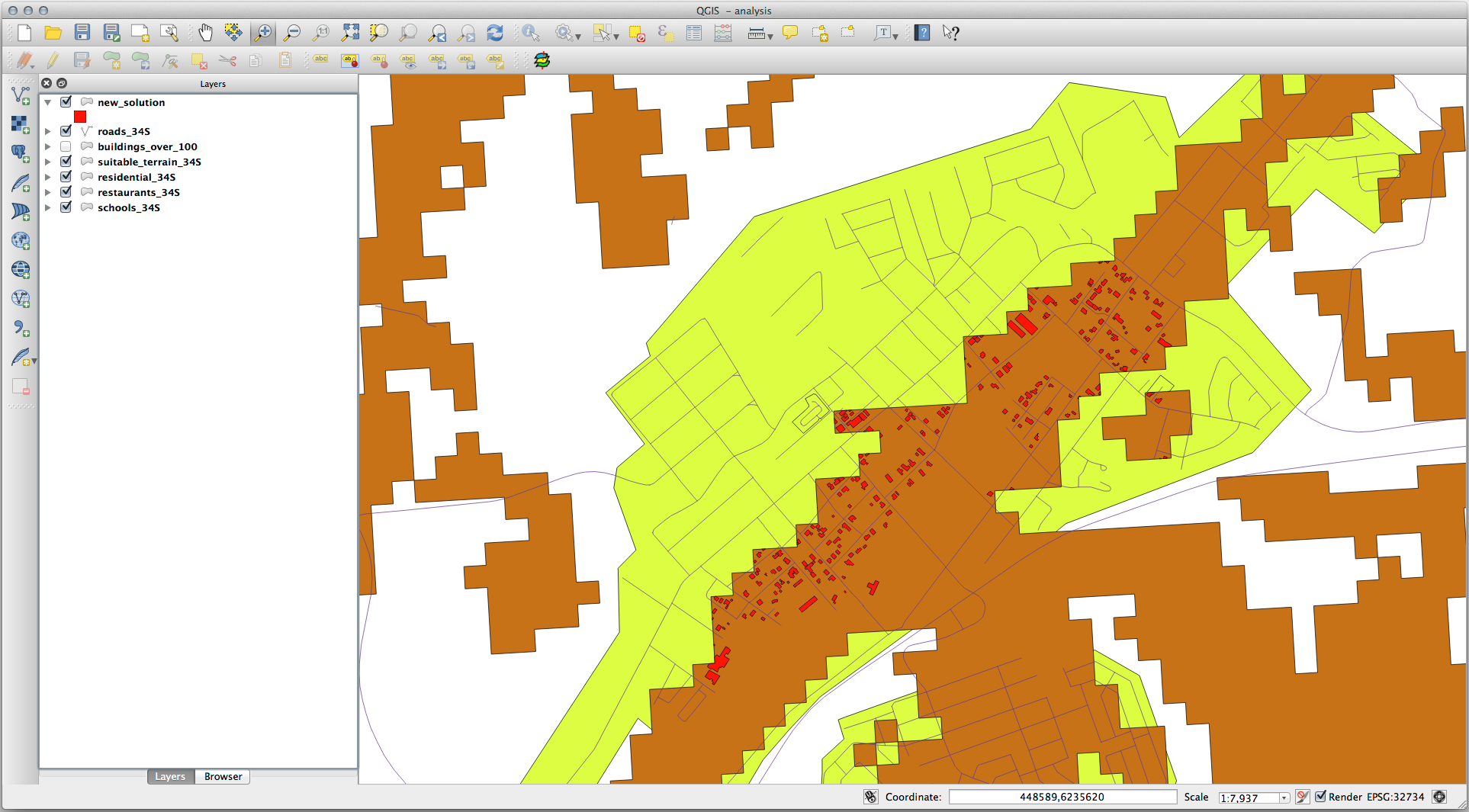
Dovresti ora avere un layer che mostra alcuni edifici come soluzione, per esempio:
8.2.2. ★★☆ Prova Tu: Controllare i risultati
Osserva ciascuno degli edifici presenti nel layer new_solution. Confrontali con il layer suitable_terrain modificando la simbologia del layer new_solution in modo che siano visualizzati solo i contorni. Cosa noti riguardo ad alcuni degli edifici? Sono tutti idonei solo perché si intersecano con il layer suitable_terrain? Perché sì o perché no? Quali considereresti non idonei?
Soluzione
Potresti notare che alcuni degli edifici nel tuo layer new_solution sono stati “tagliati” dallo strumento Intersection. Ciò indica che solo una parte dell’edificio – e quindi solo una parte dell’immobile – si trova su un terreno idoneo. Possiamo quindi tranquillamente eliminare tali edifici dal nostro set di dati.
8.2.3. ★★☆ Provate Tu: Affinare l’Analisi
Puoi vedere dai risultati che alcuni edifici sono stati inclusi ma non sono veramente adatti, quindi possiamo affinare l’analisi.
Vogliamo assicurarci che la nostra analisi restituisca solo gli edifici che ricadono interamente all’interno del layer suitable_terrain. Come potresti ottenere questo risultato? Utilizza uno o più strumenti di analisi vettoriale e tieni presente che i nostri edifici hanno tutti una superficie superiore a 100 metri quadrati.
Soluzione
Al momento, la tua analisi dovrebbe assomigliare a questa:
Si consideri un’area circolare, continua per 100 metri in tutte le direzioni.

Se è più grande di 100 metri di raggio, allora sottraendo 100 metri dalla sua estensione (da tutte le direzioni) si otterrà che una parte di essa sarà lasciata al centro.
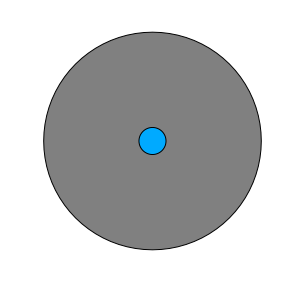
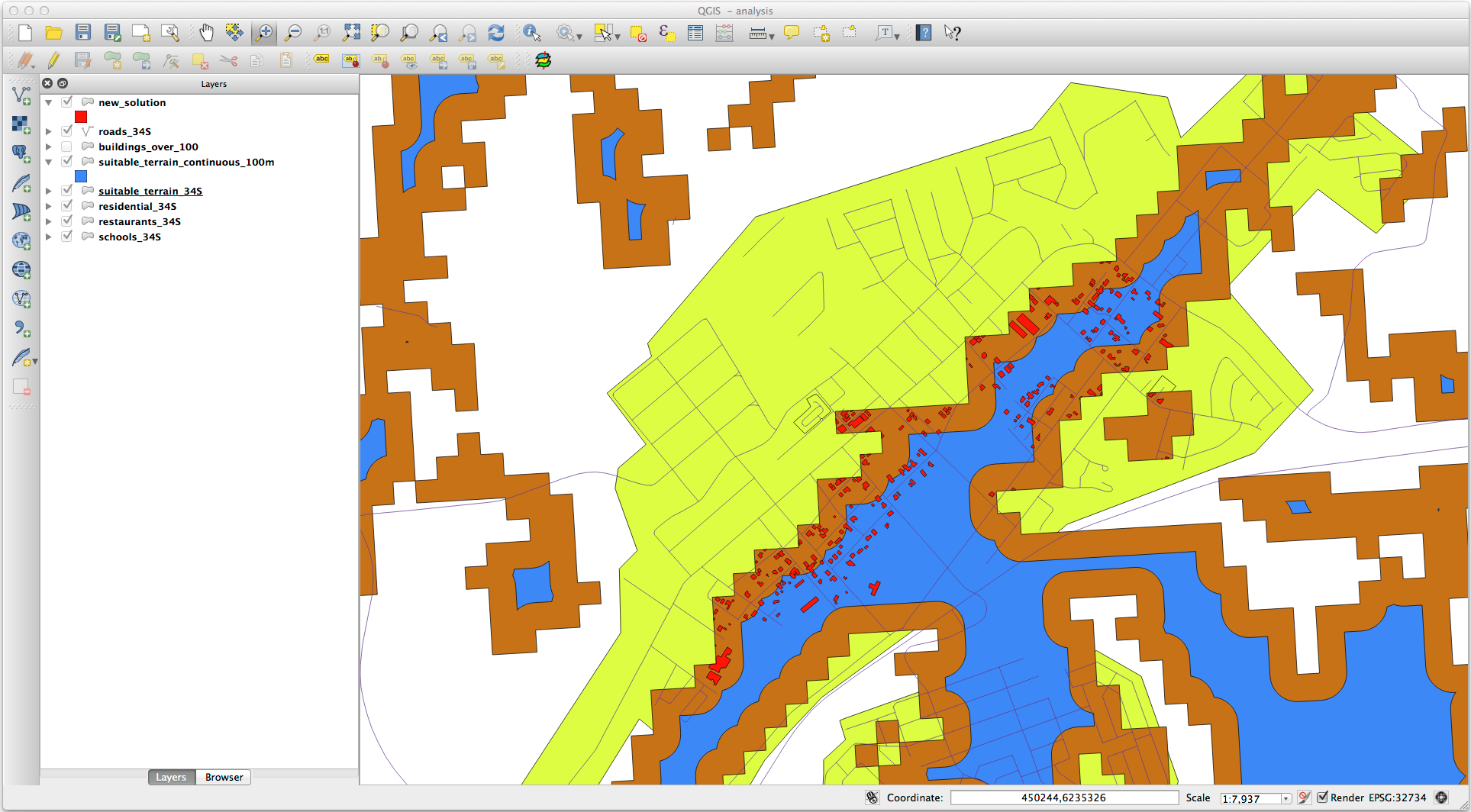
Pertanto, puoi applicare un buffer interno di 100 metri al layer vettoriale esistente denominato suitable_terrain. Nel risultato della funzione buffer, la parte del layer originale che rimane rappresenterà le aree in cui il terreno è idoneo per 100 metri oltre il limite.
Per dimostrarlo:
Vai a per aprire la finestra di dialogo Buffer.
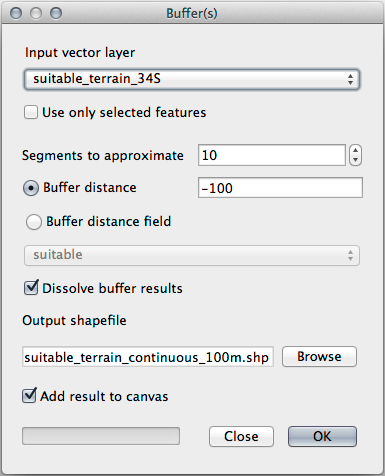
Impostalo come questo:
Utilizza il layer
suitable_terraincon10segmenti e una distanza di buffer pari a-100. (La distanza è espressa automaticamente in metri poiché la mappa utilizza un Sistema di Riferimento proiettato.)Salva il risultato in
exercise_data/residential_development/comesuitable_terrain_continuous100m.shp.Se necessario, sposta il nuovo layer sopra il layer originale
suitable_terrain.I tuoi risultati saranno qualcosa di simile a questo:
Ora usa lo strumento Select by Location ().
Imposta in questo modo:
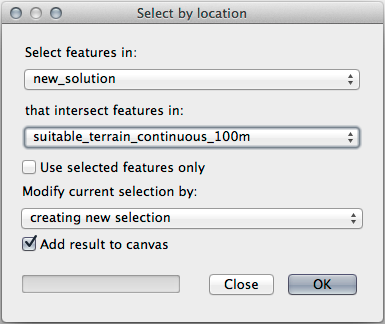
Seleziona gli elementi presenti in
new_solutionche si intersecano con quelli presenti insuitable_terrain_continuous100m.shp.Questo è il risultato:
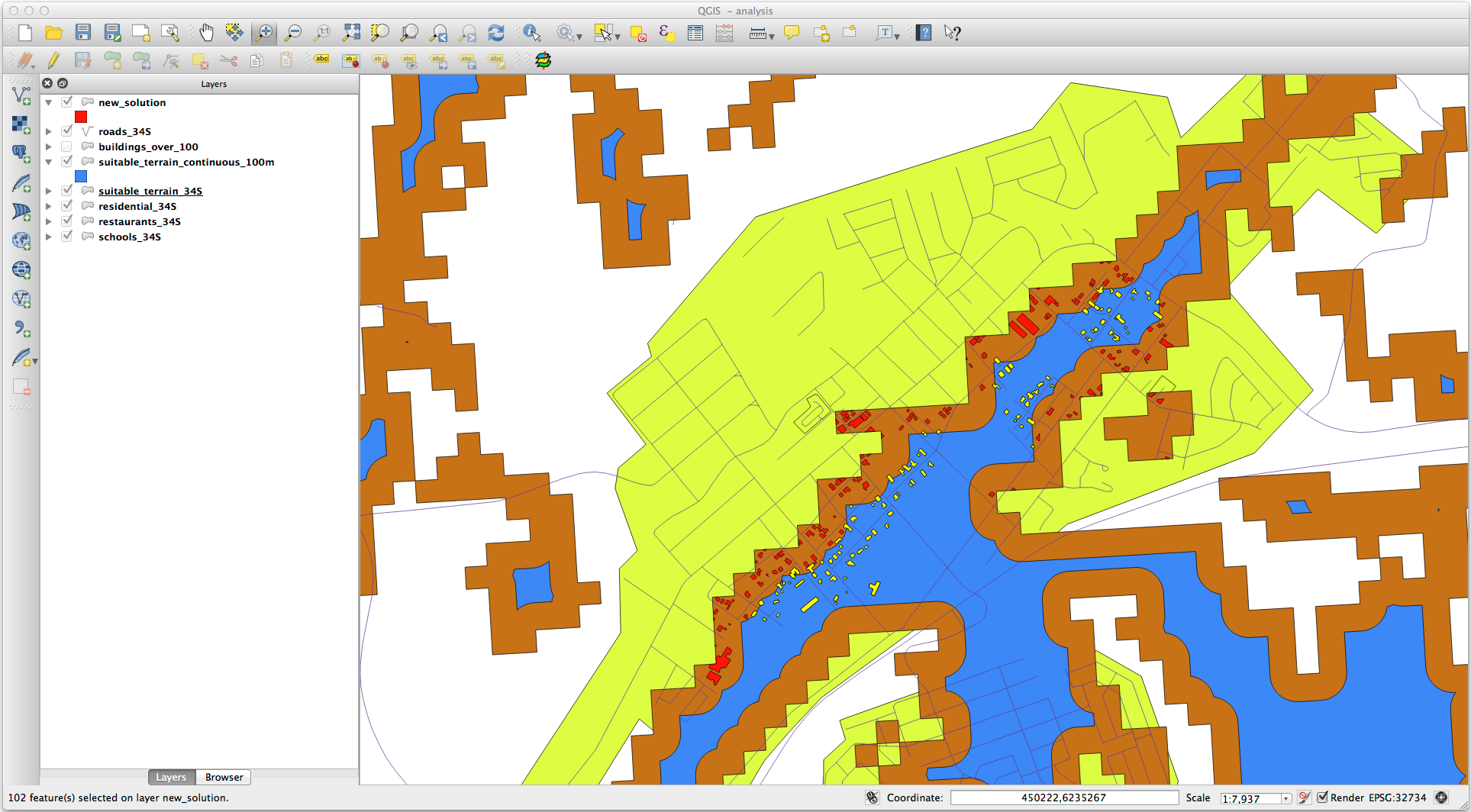
Sono stati selezionati gli edifici contrassegnati in giallo. Sebbene alcuni di essi si trovino in parte al di fuori del nuovo layer
suitable_terrain_continuous100m, essi rientrano pienamente nel layer originalesuitable_terraine soddisfano quindi tutti i nostri requisiti.Salva la selezione sotto
exercise_data/residential_development/comefinal_answer.shp.
8.2.4. In Conclusione
Ora hai risposto alla domanda iniziale, e puoi dare un’opinione (con motivazioni supportate da un’analisi) per una raccomandazione su quale proprietà sviluppare.
8.2.5. Cosa Segue?
Di seguito esporrai questi risultati come parte del tuo secondo compito.